Red Blue: An Underrated Sports Manga

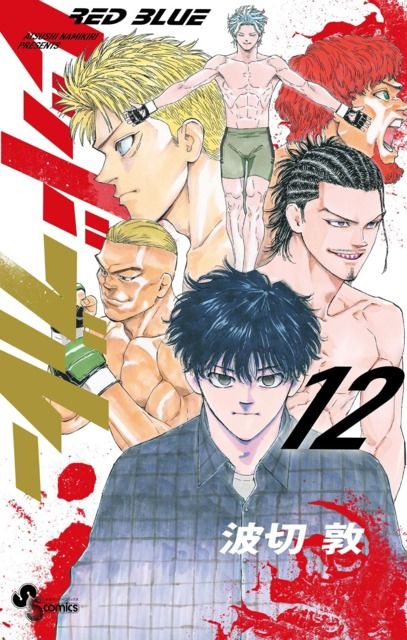
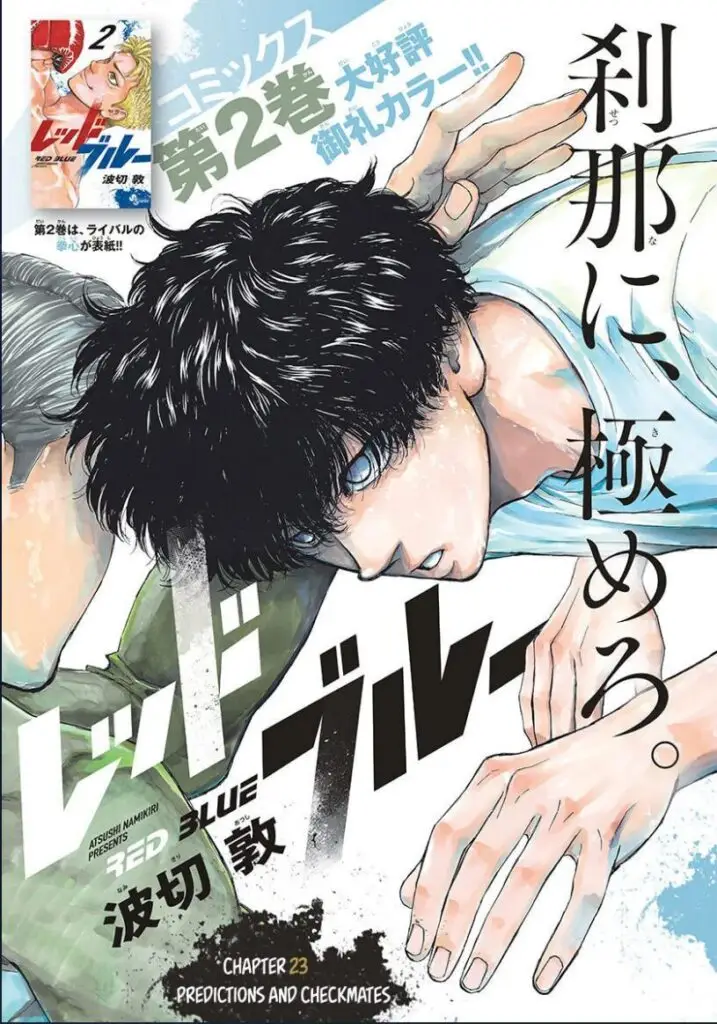
“A story about the sullen Aoba Suzuki and the rising star Kenshin Akasawa making their way into the world of MMA”

Potential Spoilers Ahead!

An Unhinged Entry To The Sports Genre - But Not In The Way You Expect!

Sports manga, especially fighting manga, has always been one of my favorite genres. If you’re anything like me, you love to be at the edge of your seat – intense tournament arcs, wild and creative fighting styles, shocking upsets, and fighters pushing the limit on human ability. There is nothing quite like watching a protagonist achieve the impossible through sheer physical willpower.

Naturally, I am a huge fan of series such as Grappler Baki, Kengan Asura, Holy Land, All-Rounder Meguro, and of course, Hajime No Ippo. But recently, I stumbled on perhaps the most ordinary fighting manga I’ve ever read which has quickly became one of my all time favorites: Red Blue.

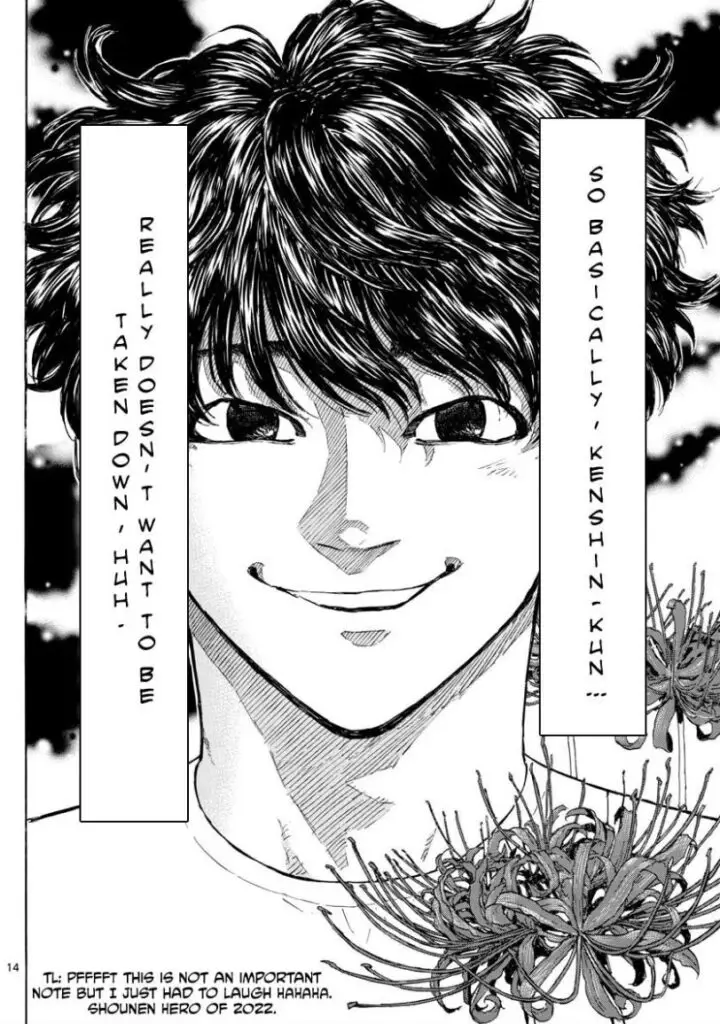
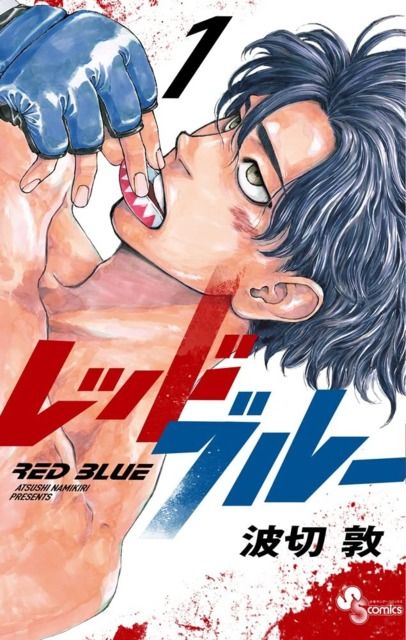
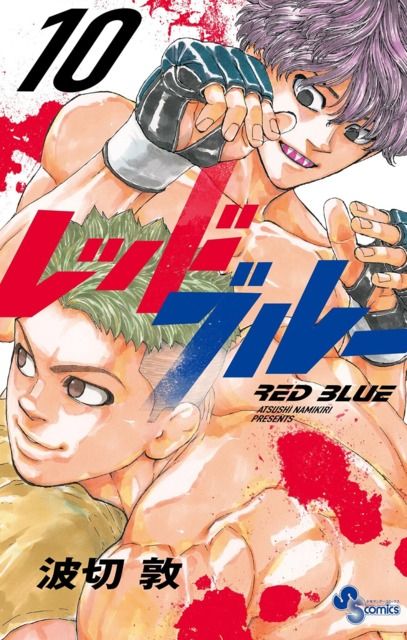
This MMA manga features one of the most unlikely protagonists I’ve encountered, mainly because he isn’t a “protagonist” in the traditional sense at all. In fact, he’d probably glare at you for suggesting it. Red Blue follows the rise of Aoba Suzuki, a young man driven purely by spite, who hurls himself into the world of MMA for a single purpose: to defeat the real main character, Kenshin Akazawa.

Meet Aoba Suzuki

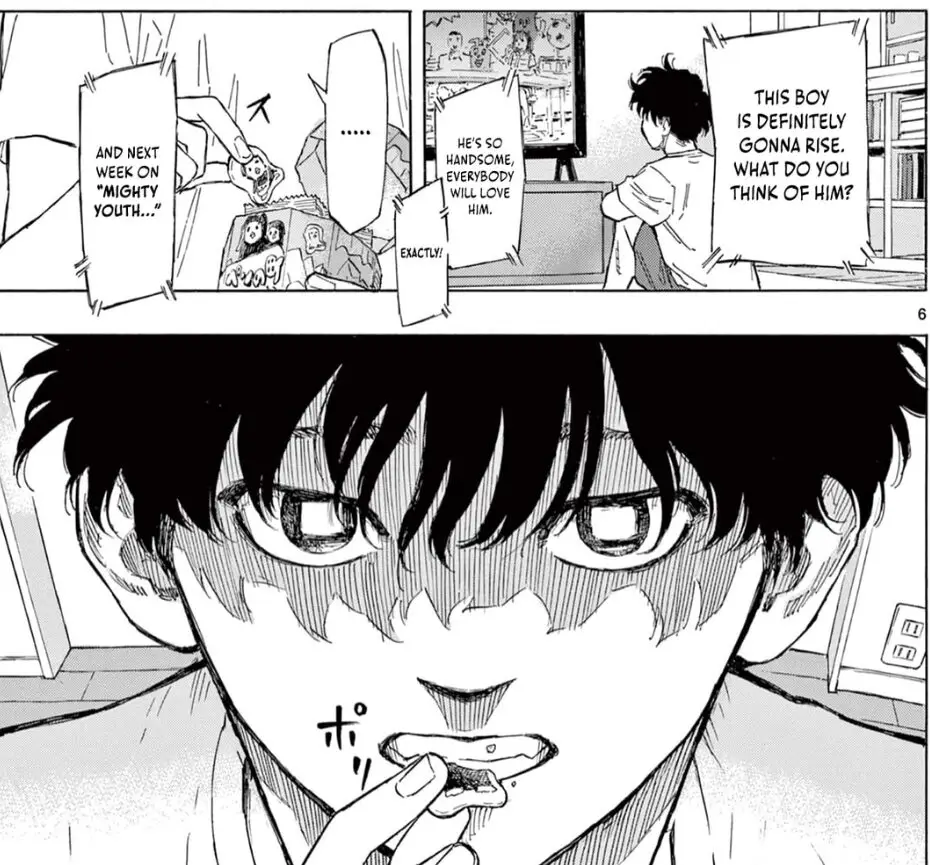
Aoba Suzuki is a 16-year-old high school student who, at first glance, hardly seems like the kind of person destined to lead a story. He would even describe himself as utterly ordinary. Living with asthma and enduring constant bullying, Aoba had resigned himself to a quiet, unremarkable life. While others around him seemed to move forward laughing, thriving, and finding purpose—he lingered in the background, unnoticed.

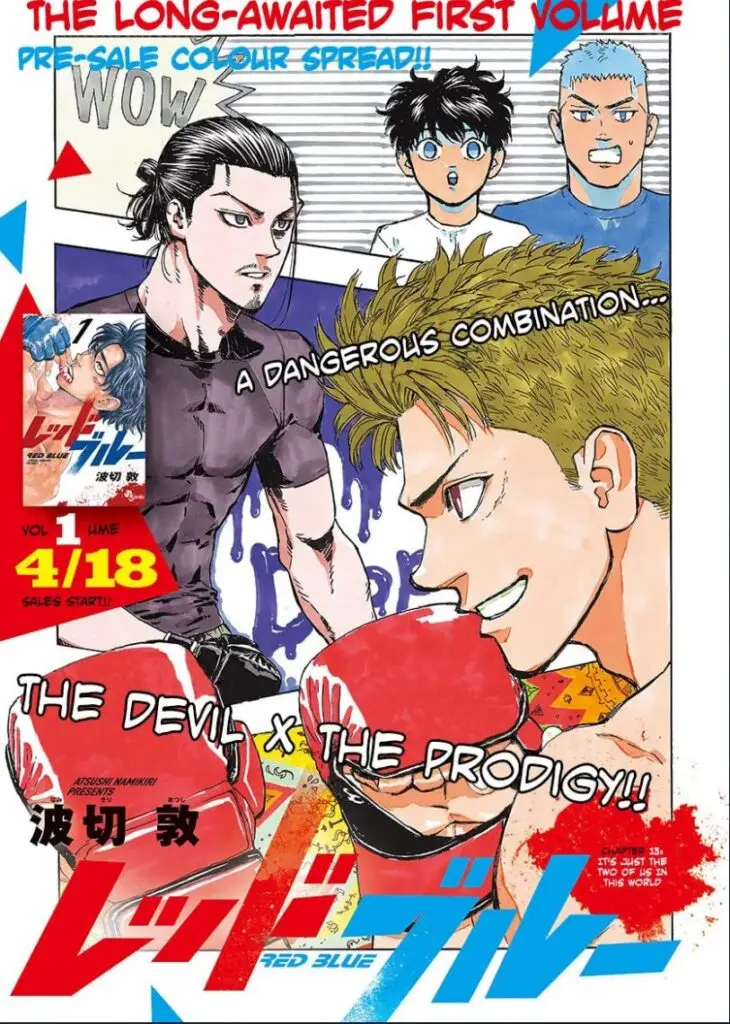
That changes one day when, during yet another routine bullying session at the hands of Sannosuke Iwase, Aoba is unexpectedly rescued by MMA superstar Kenshin. Everything about Kenshin stands in stark contrast to Aoba: he’s strong, confident, and undeniably gifted. In many ways, Kenshin lives like the main character. A true shounen protagonist in his own world.

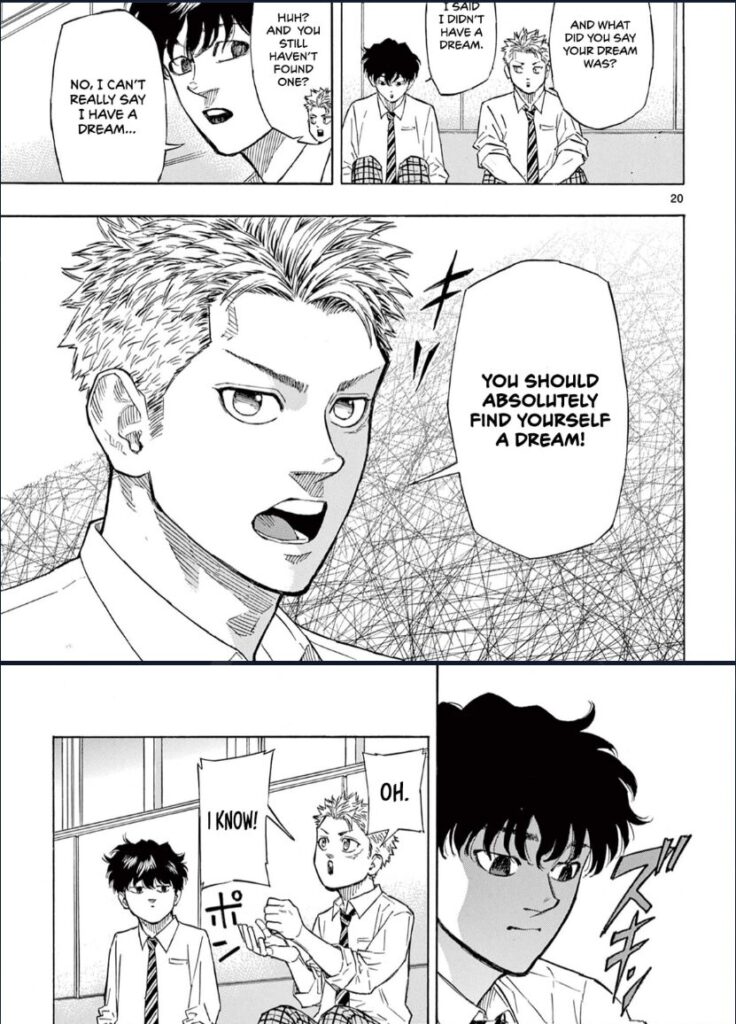
We learn that Aoba and Kenshin grew up in the same schools but because of Aoba being sickly majority of his life, Kenshin never noticed him until now. This all sounds like the perfect formula for any rival, shounen protagonist dynamic. Although Aoba is not that enthusiastic, Kenshin being the stand up guy he is takes it upon himself help Aoba. He first offers to fight off bullies for him but Aoba declines his charity. Kenshin being a guy who doesn’t give up easily saying that “everyone needs to have a dream”.  

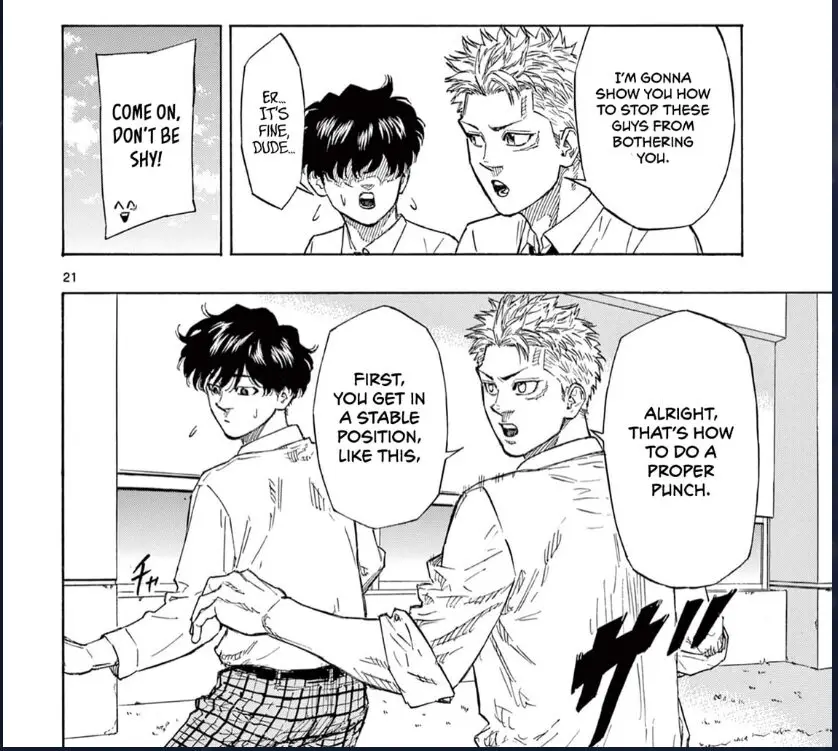
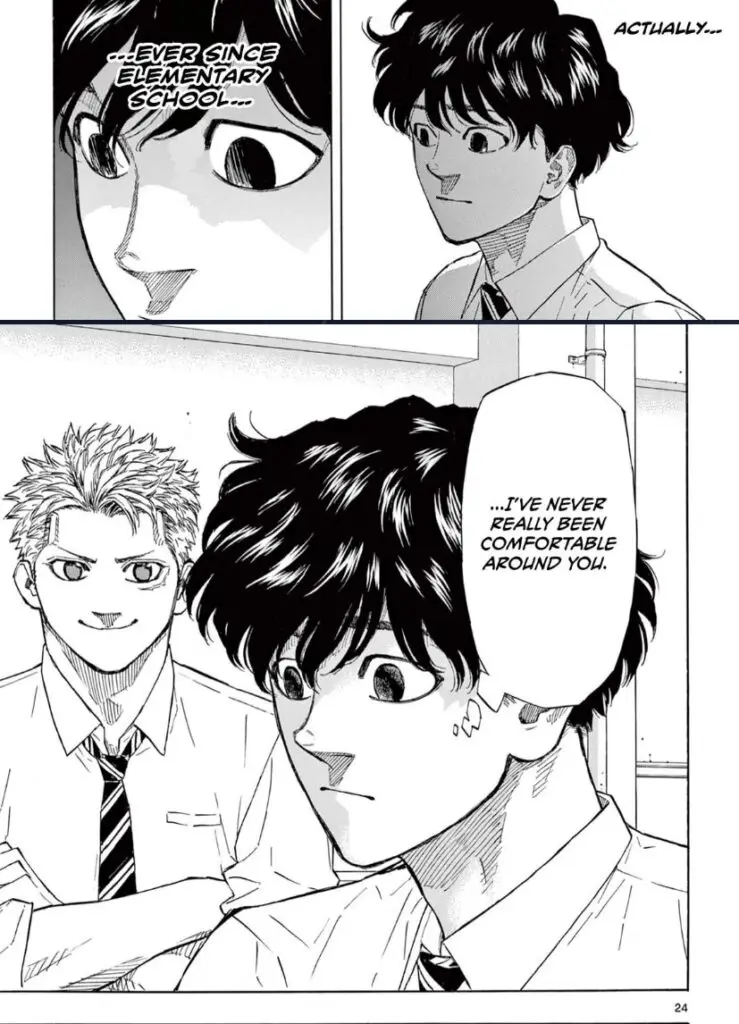
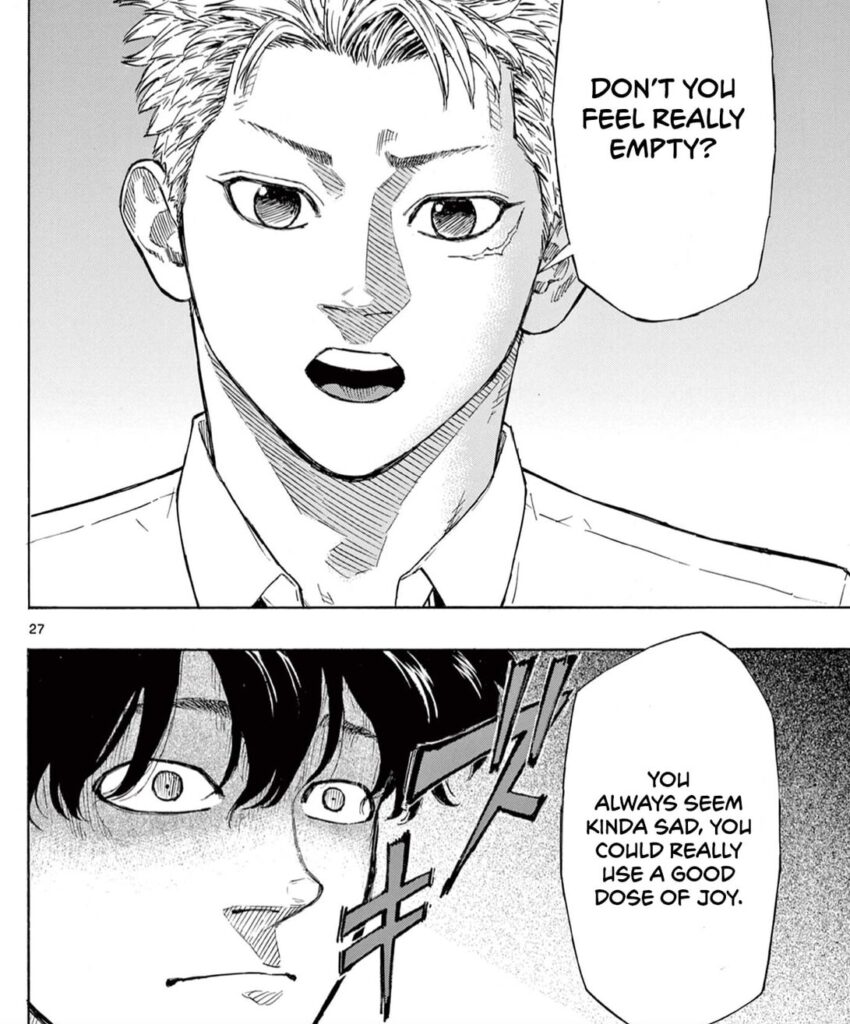
While Kenshin is teaching Aoba a basic karate straight, Aoba begins to understand that his resentment toward Kenshin actually comes from jealousy—jealousy that Kenshin has a goal, a purpose, something to chase. Then Kenshin asks him a simple but cutting question: “Don’t you feel empty, living without a purpose?”

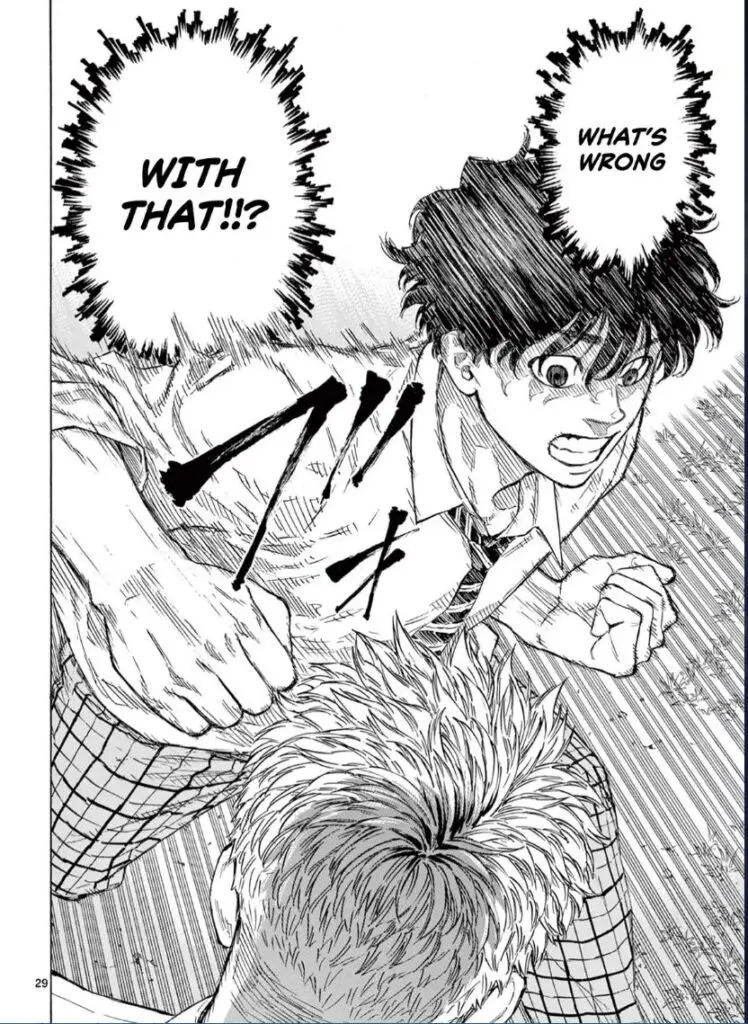
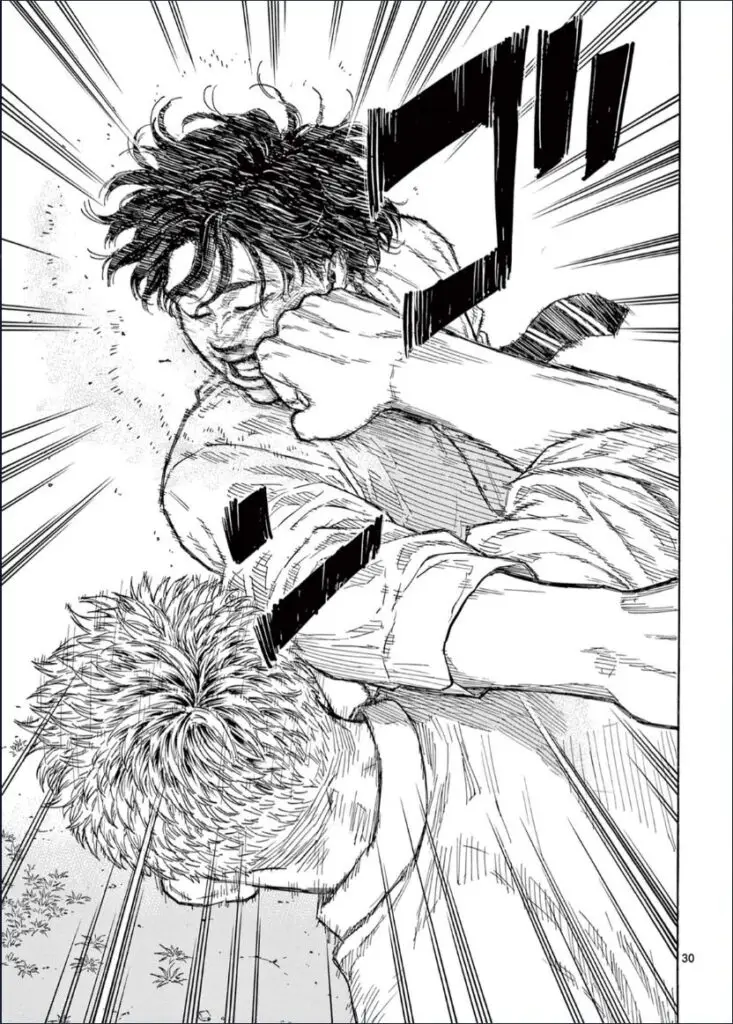
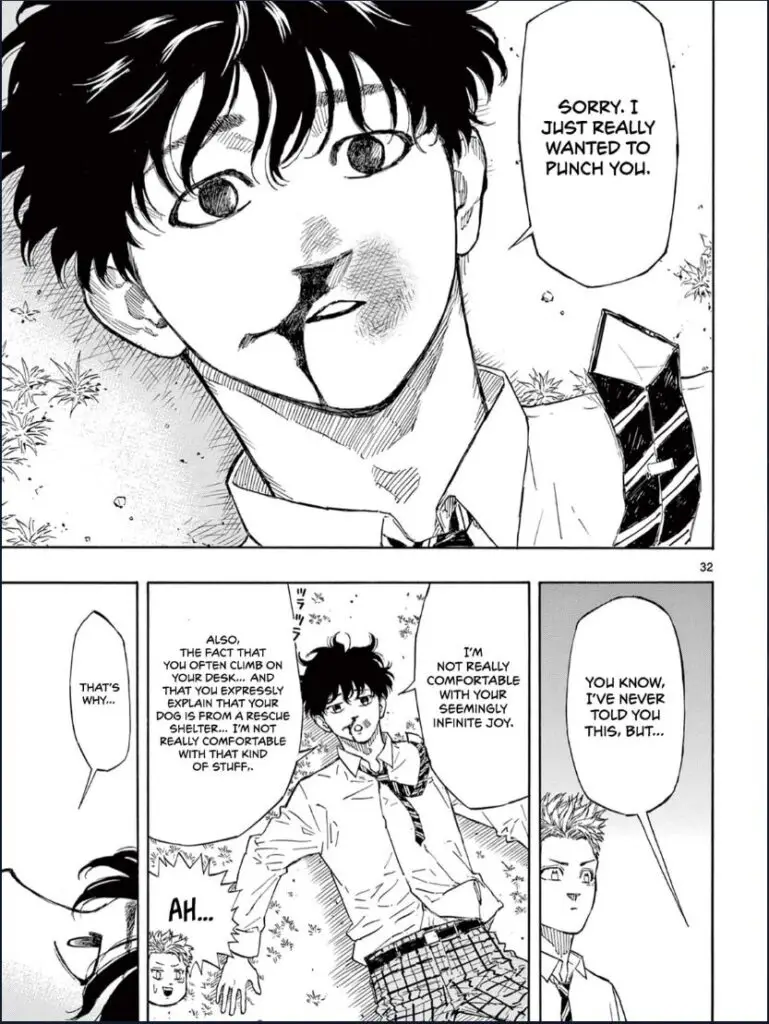
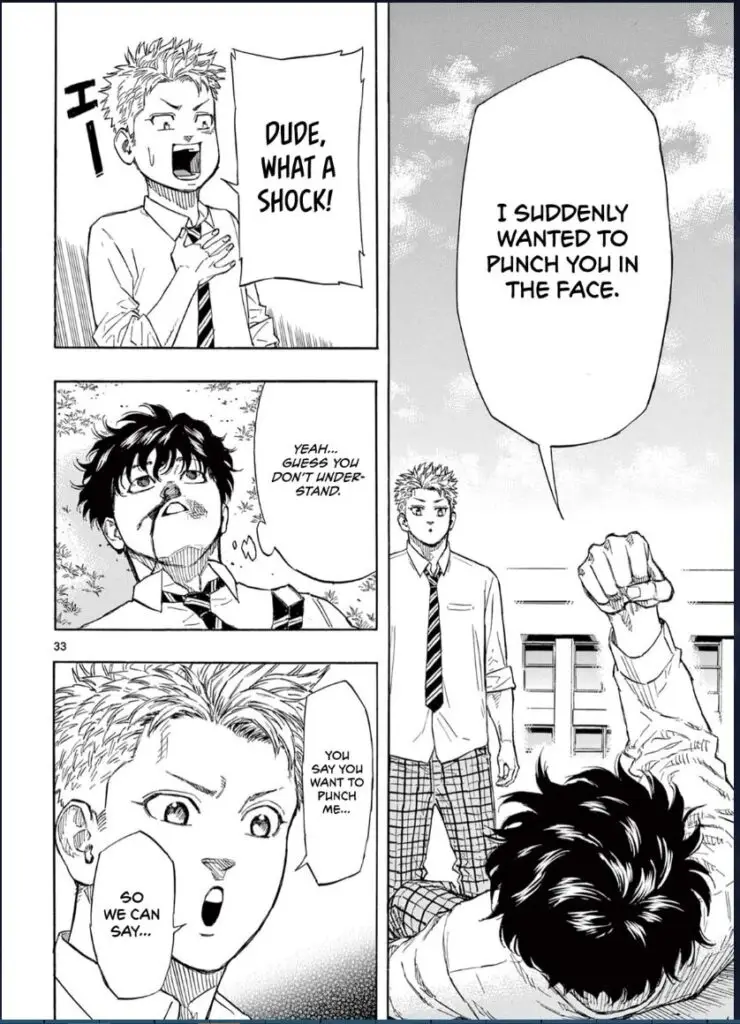
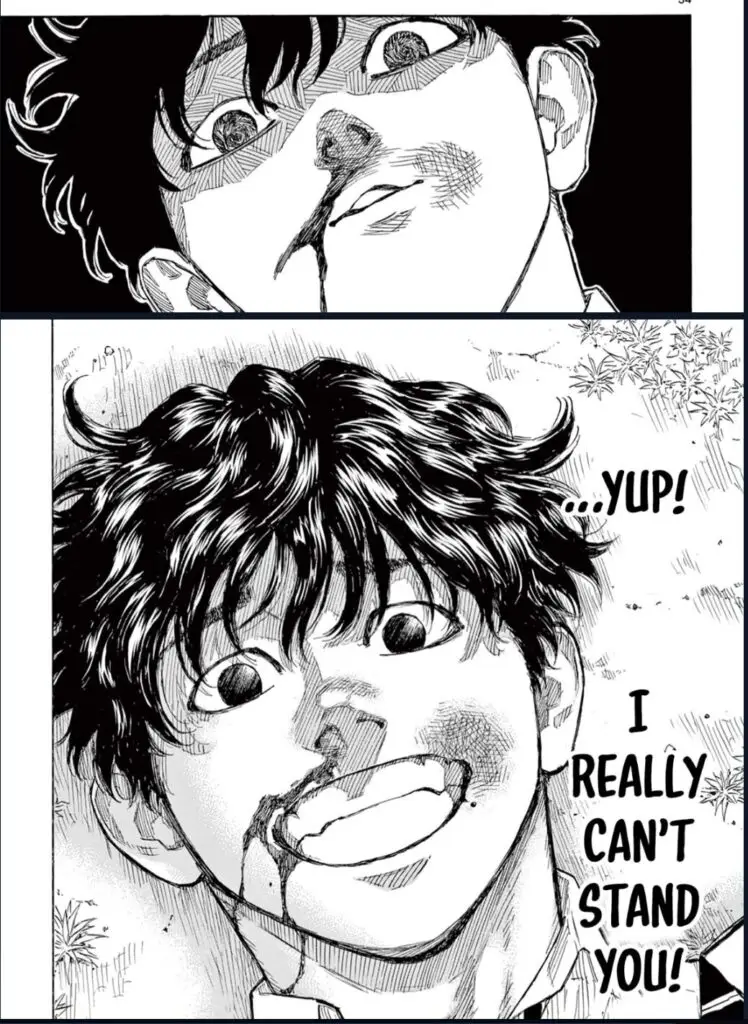
The words hit Aoba harder than any punch. Something inside him snaps awake. Years of envy and pent-up frustration boil to the surface, and in that moment Aoba throws the very first punch of his life—directly at Kenshin. Naturally, the rising MMA star counters with a brutal cross that drops Aoba flat.

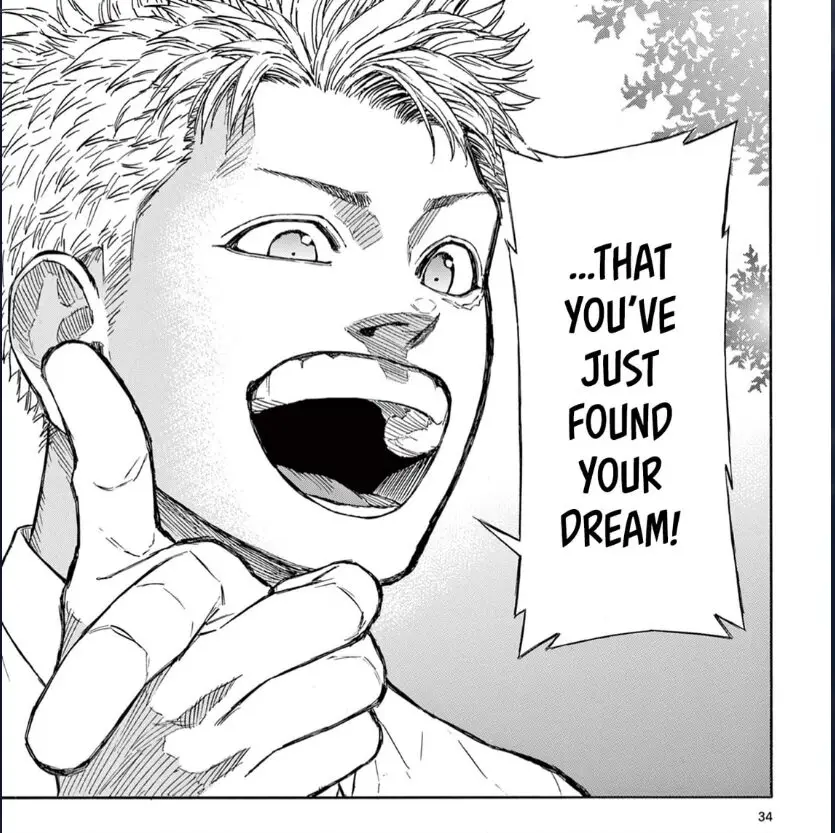
What happens next is a pivotal shift in the manga. Aoba’s expression changes; the dullness in his eyes lifts, replaced by a spark of emotion and clarity. He admits that he punched Kenshin because he can’t stand Kenshin’s relentless optimism, the way he tries to force his positive worldview onto everyone else.

Kenshin, being the well-meaning airhead he is, completely misreads the situation. He assumes Aoba has finally found his purpose—thanks to him. What he doesn’t realize is that he may have just awakened something far more unhinged and unpredictable inside Aoba.

A Devils Rise: Why Aoba Is A Refreshing Protagonist

Typically, a shounen protagonist follows a familiar formula: boundless optimism, clear motivations, a pure heart, a strong sense of justice, and that classic “never give up” attitude. Aoba Suzuki possesses almost none of these traits. Instead, he is driven almost entirely by spite and that alone gives his journey a hilarious and refreshingly unique appeal.

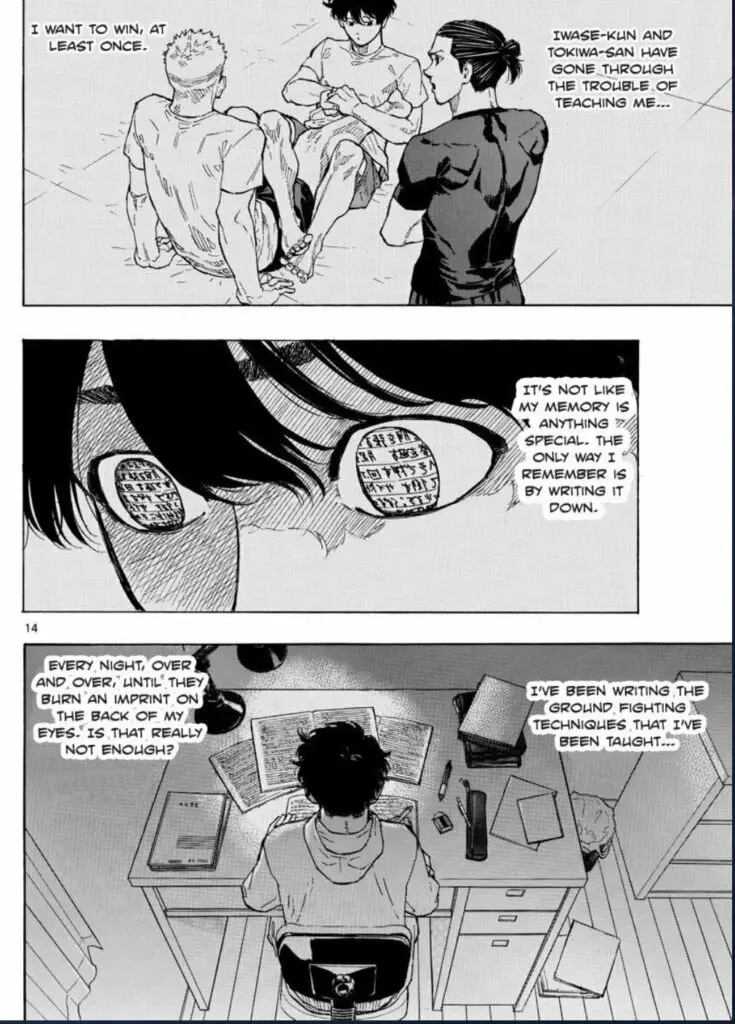
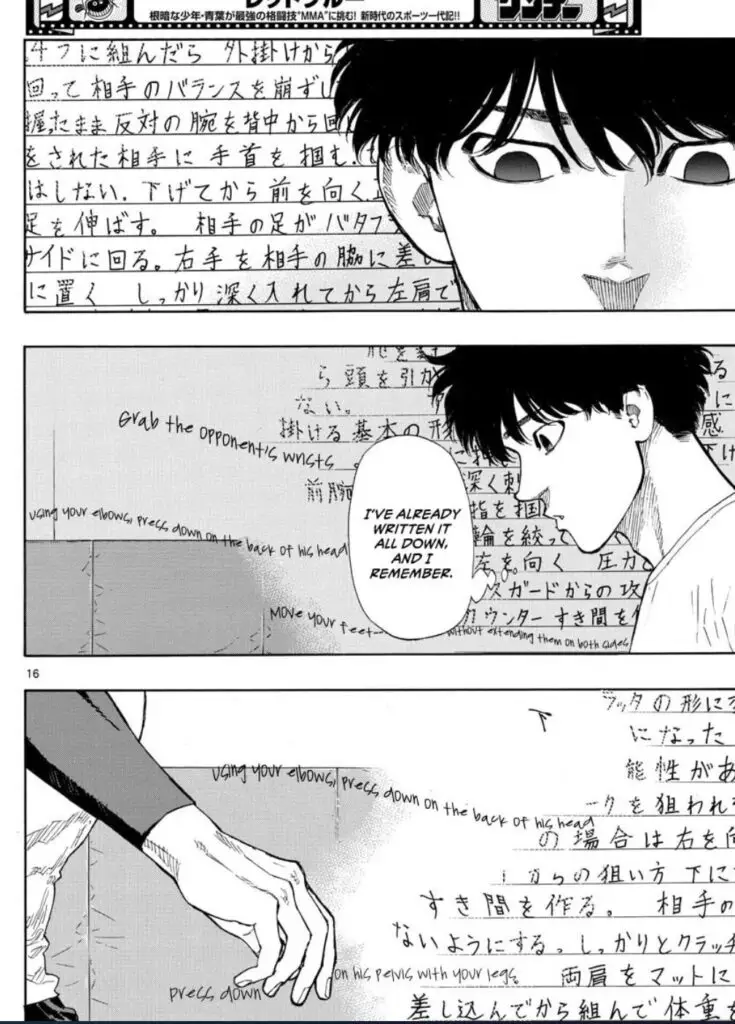
There’s just one problem: Aoba isn’t a natural fighter in the slightest. He’s physically weak, held back by asthma, and is the truest underdog even within his own story. While Kenshin tears through the BOOST tournament on sheer talent, Aoba progresses slowly, building his skills piece by piece as he grows stronger. What he lacks in raw power, he makes up for with an exceptional memory and an impressive ability to apply techniques.

From the very beginning, Aoba understands that he must work ten times harder than anyone else. He studies every night—writing everything down, committing it to memory, and practicing relentlessly until he masters each technique. There’s something deeply inspiring about watching a complete beginner with no inherent talent and I mean none. Most sports manga protagonists at least start at a “one,” never a zero. Ippo from Hajime no Ippo has a strong body forged through years of physical labor helping his mother, and even Yuu from Holyland begins as a fighting prodigy.

Aoba, however, has no natural talent at all. And that absence makes his journey even more compelling, because it gives him something more exciting than raw ability: boundless potential and true unpredictability as a fighter.
Aoba the Grappler

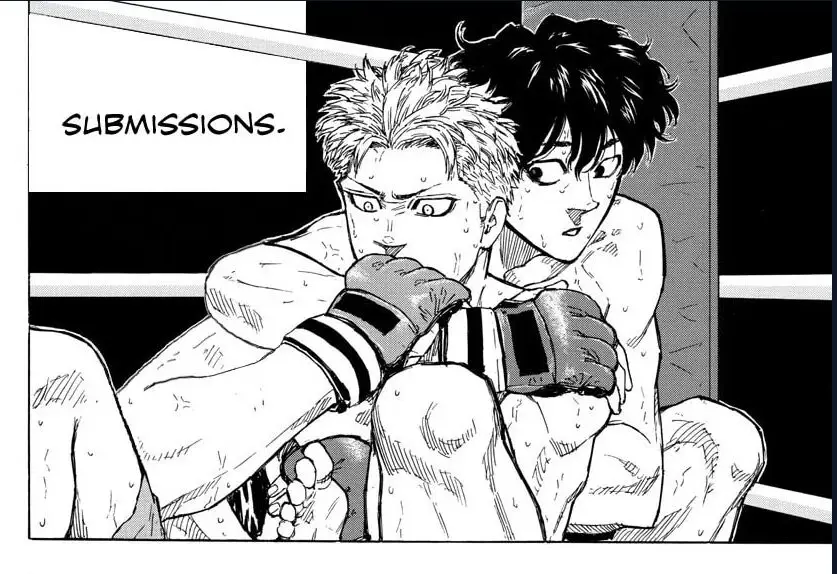
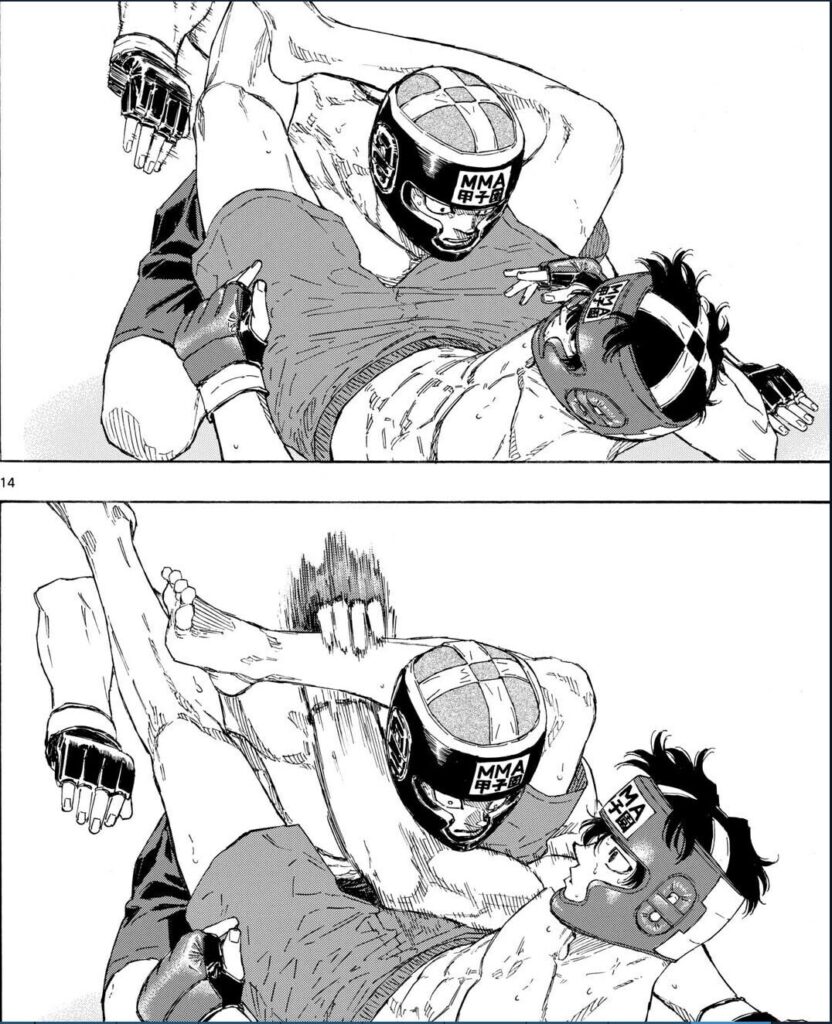
The fact that Aoba ultimately chooses to specialize in grappling really stood out to me. Manga of this type usually go for the flashier striker character who’s aim is to punch faster and harder. His choice in fighting style completely aligns with his unconventional character. Aoba is a bit twisted due to his isolating upbringing. He doesn’t just want to defeat Kenshin, he wants to snuff him out entirely. And considering that Kenshin is a genius striker, its truly bad ass that Aoba choses the opposite just to spite him in the ring one day. What a guy.

You’d think a main character who relies on a slower, more calculated fighting style would make the fights feel boring or dragged out. But Atsushi Namikiri’s art and pacing do the exact opposite. Every exchange feels tense, and the way panels are laid out builds so much suspense that it’s hard not to get hyped waiting for the next scanlation update. On top of that, Red Blue has a strong cast of well-written characters. Everyone feels distinct, with their own personalities and approaches to fighting, which makes each matchup interesting instead of feeling like filler.

This is where I think Red Blue really stands out. The arcs are quick and never feel like they drag on for too many chapters. I appreciate this a lot, especially since some authors will stretch a single fight across 20+ chapters, which can become exhausting after a while. In Red Blue, matches sometimes end in just a few panels, which mirrors the fast-paced nature of real MMA where months of preparation can come down to just a few seconds in the ring.

Real-life grapplers are no exception to this. They play a patient, methodical game, waiting for the perfect moment to exploit an opponent’s mistake before locking in a submission. This is what makes Aoba stand out as such a dangerous fighter: he’s comfortable playing the long game while his opponents underestimate him.

How Red Blue Makes Every Punch Count

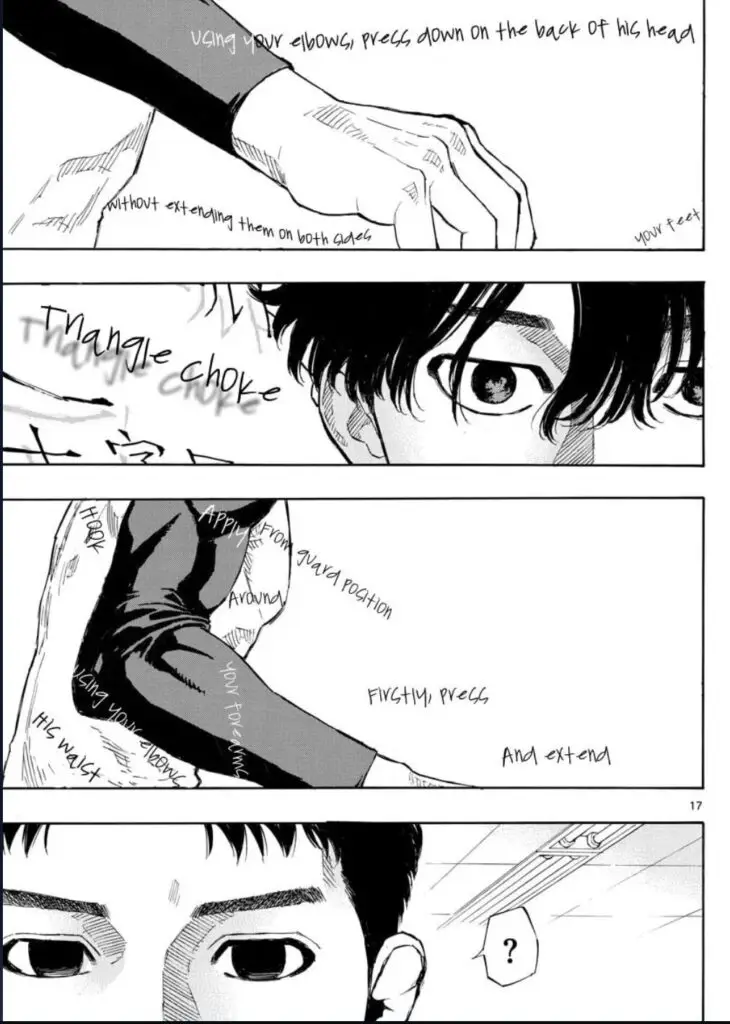
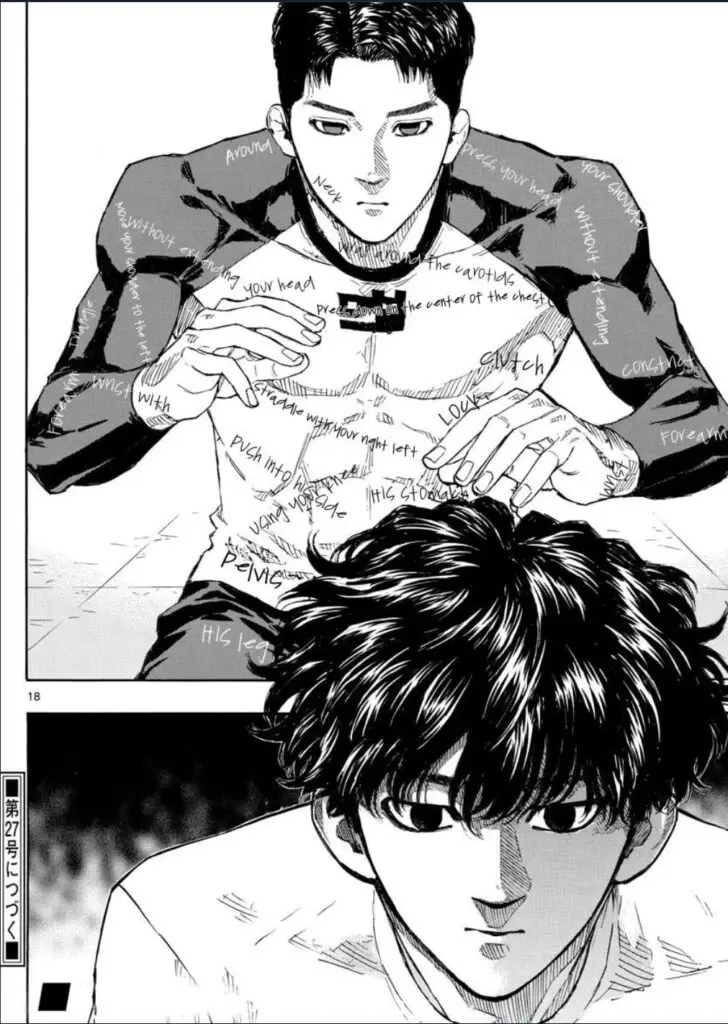
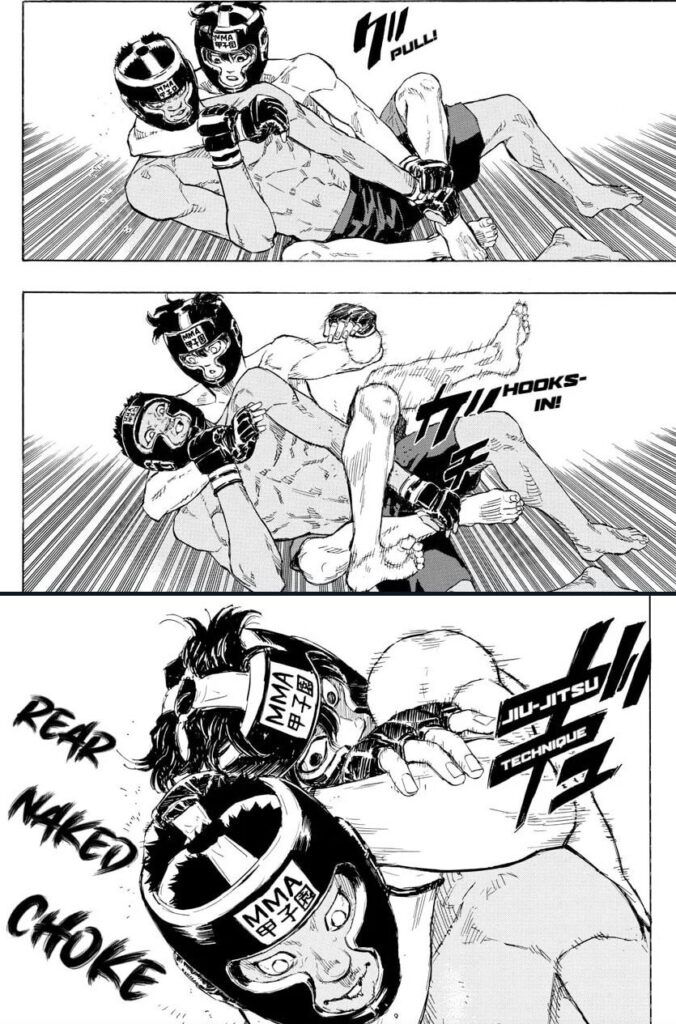
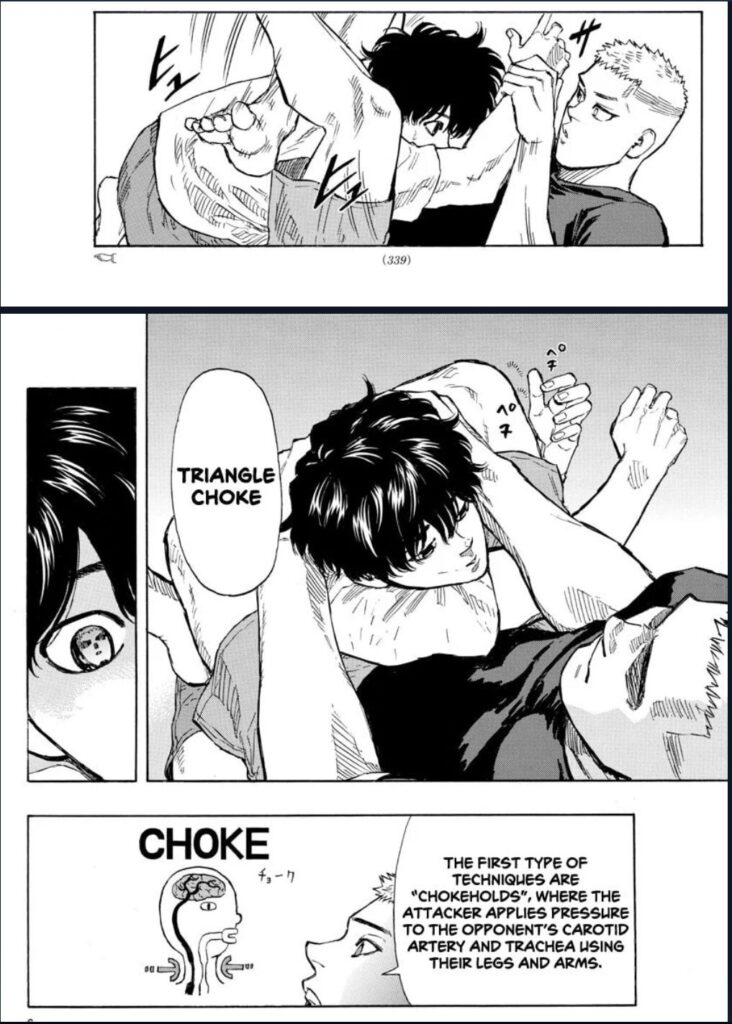
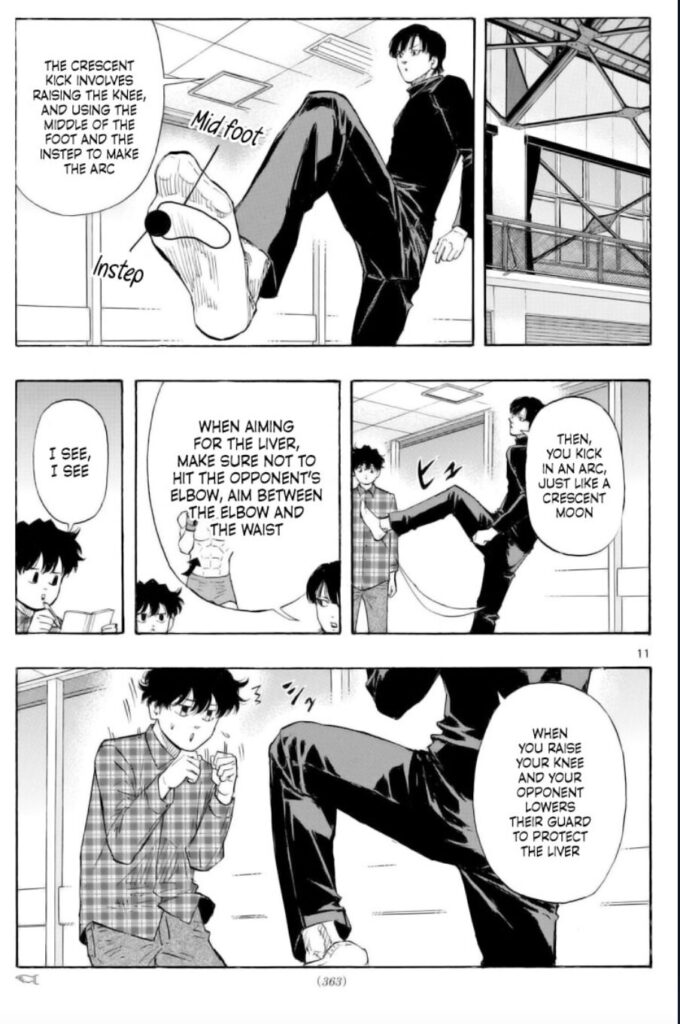
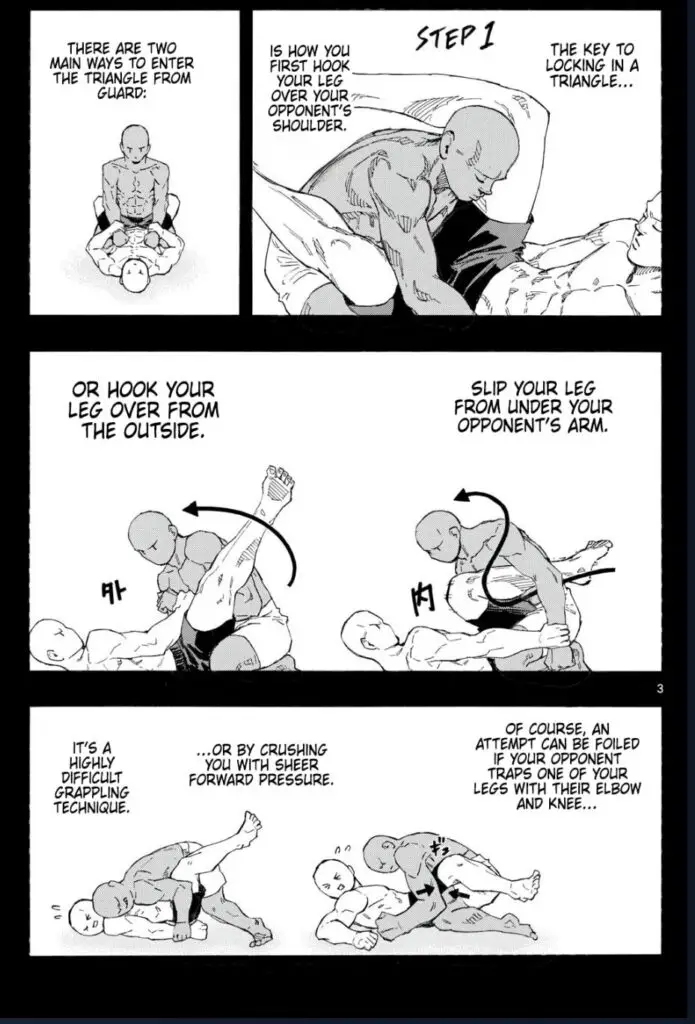
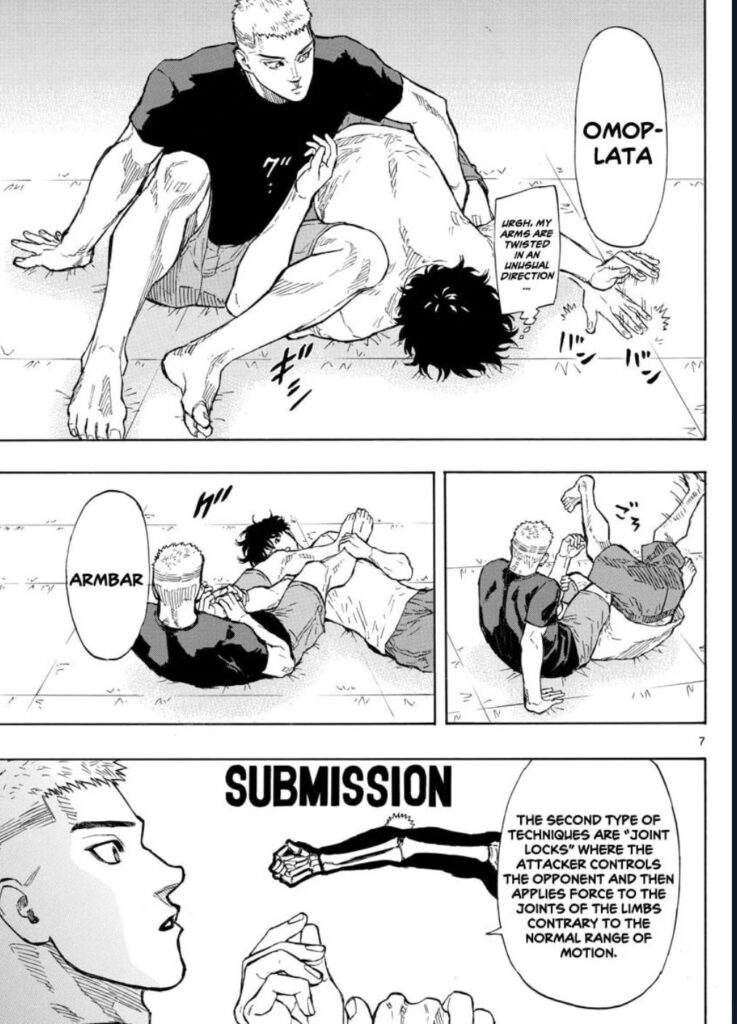
Atsushi Namikiri’s art direction is something I deeply admire. Even if you’ve never watched an MMA fight or don’t understand what goes into one, Namikiri does an excellent job not only showcasing that world but also teaching the reader proper techniques. One of the story’s greatest strengths is how it seamlessly aligns the protagonist’s first-time experiences with the reader’s own learning process.

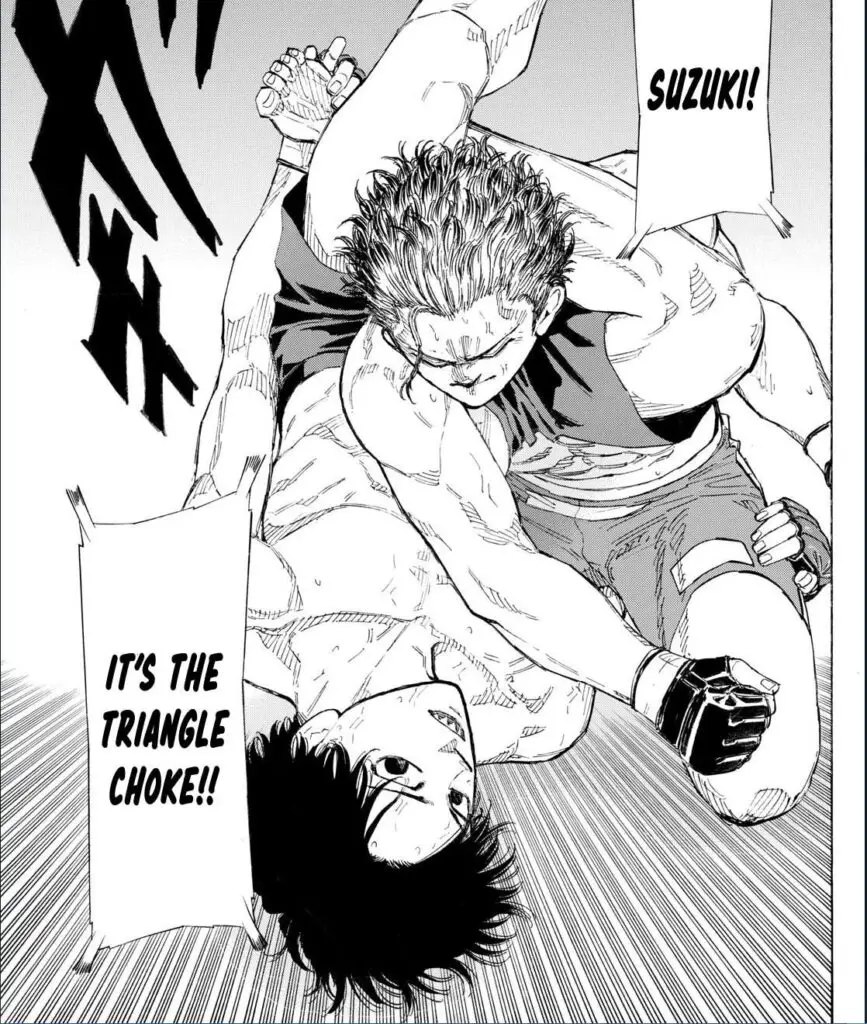
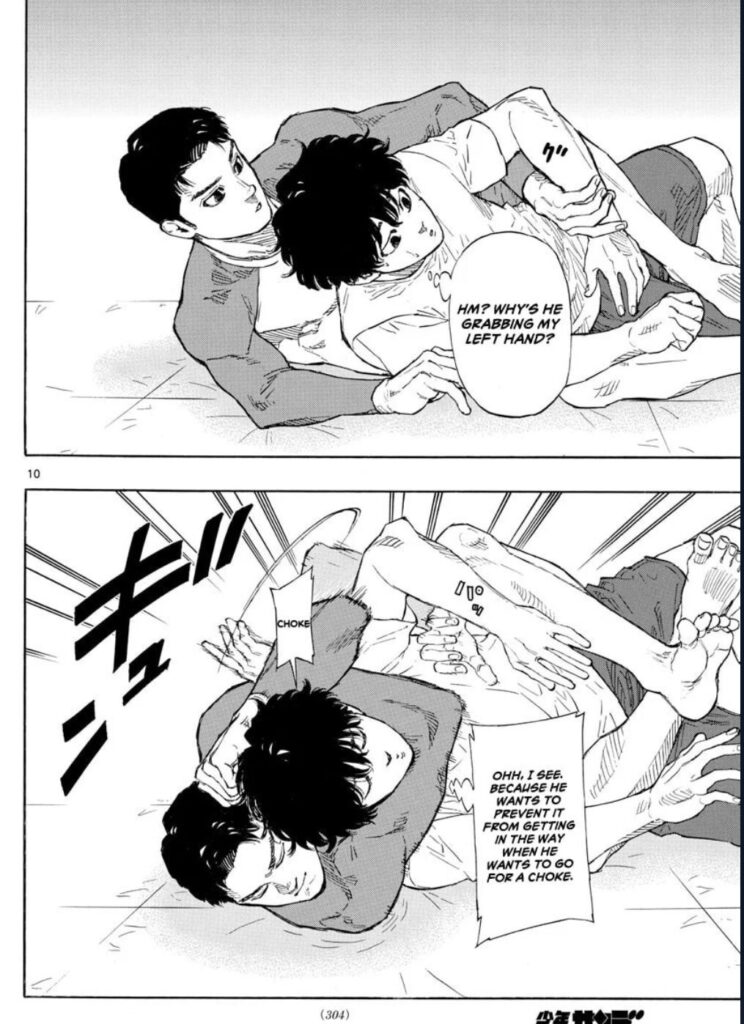
When Aoba is taught a new technique, it’s explained in a way that allows the audience to learn alongside him. Namikiri clearly illustrates correct form and execution, as well as what happens when a technique is performed incorrectly. This makes the major fights Aoba prepares for far more engaging. When you see him successfully lock in a triangle choke, for example, you recognize the precision of his form and execution. And when he fails, you find yourself thinking, “Ah, no he didn’t trap the arm. He’s going to escape!”

That shared understanding creates a strong connection to Aoba’s growth, making his progress feel personal and as a result, his victories feel like your own.

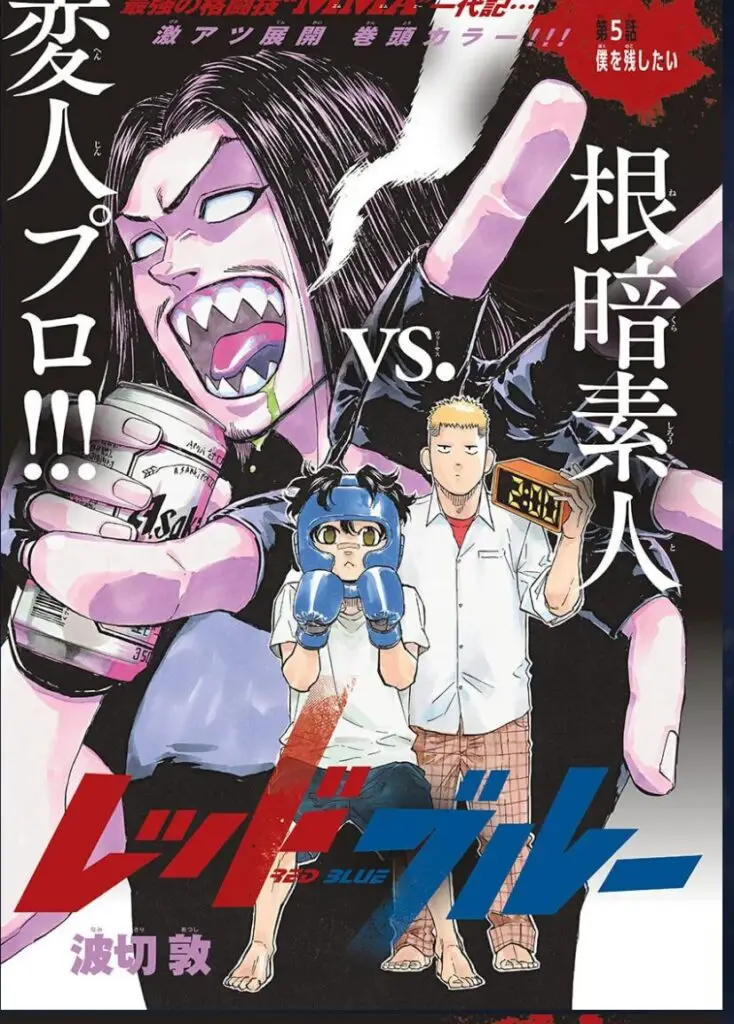
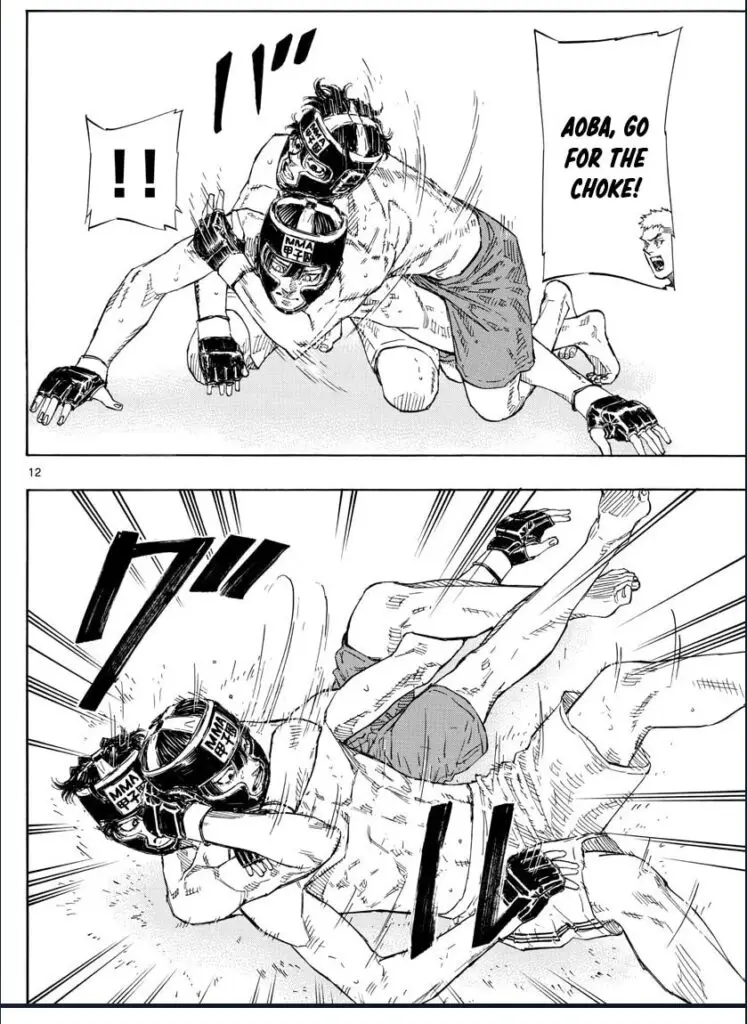
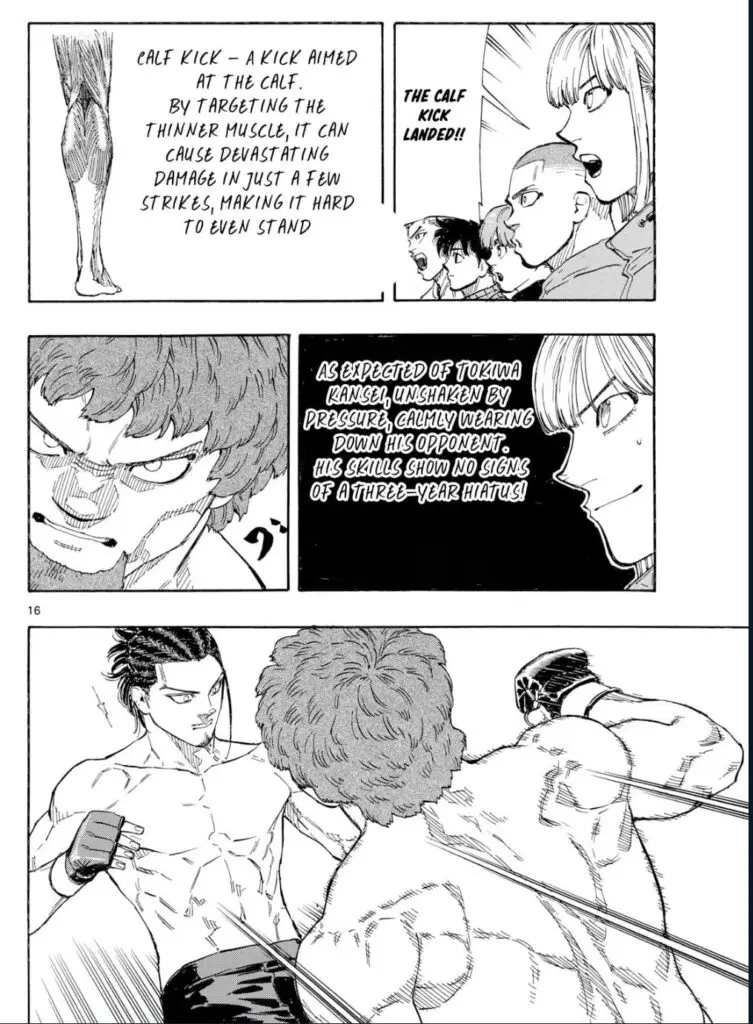
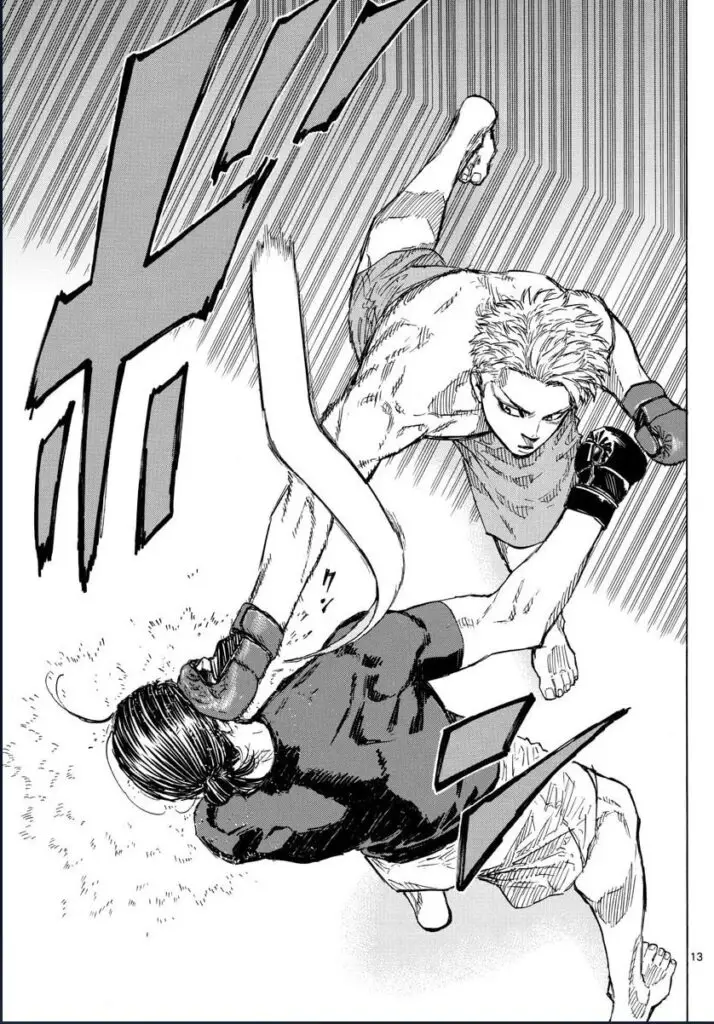
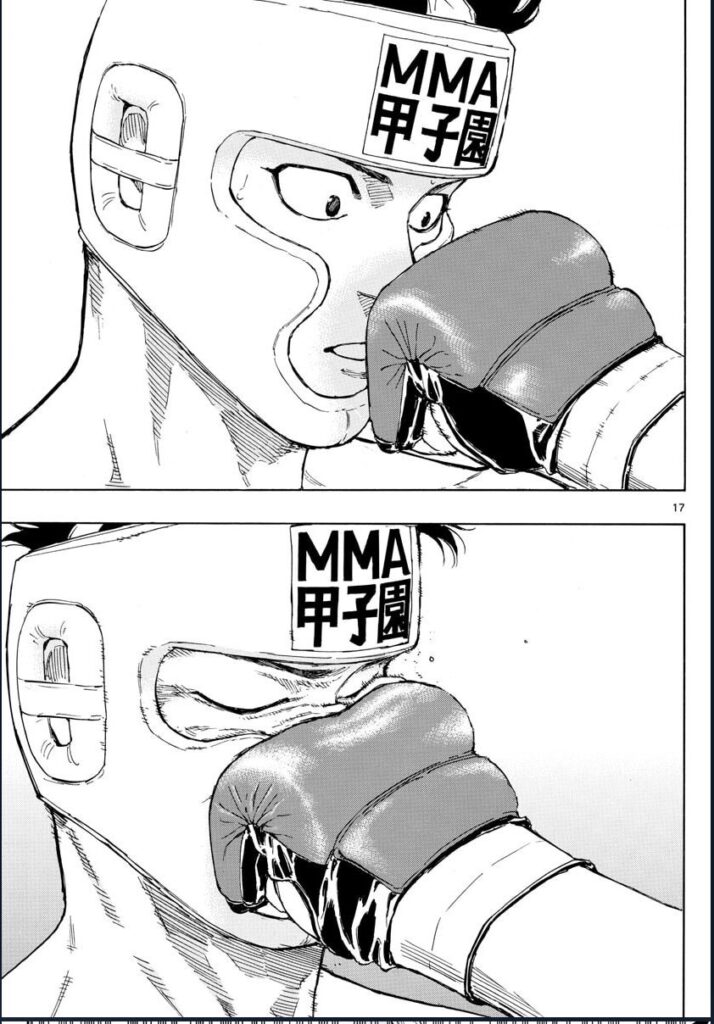
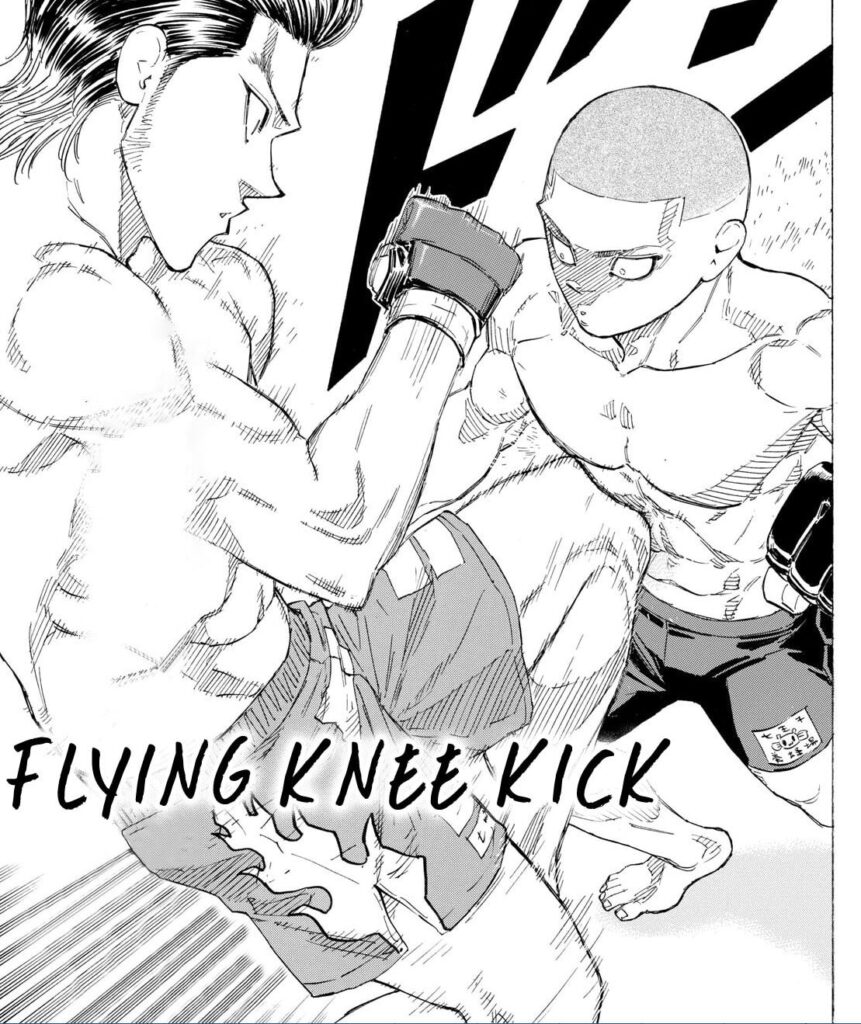
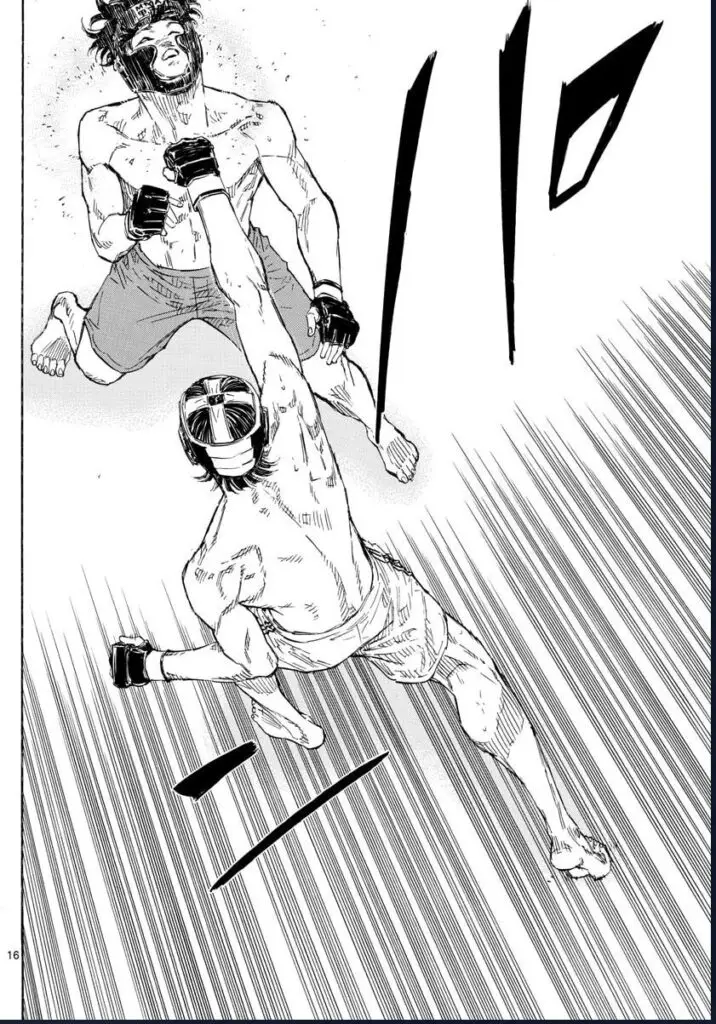
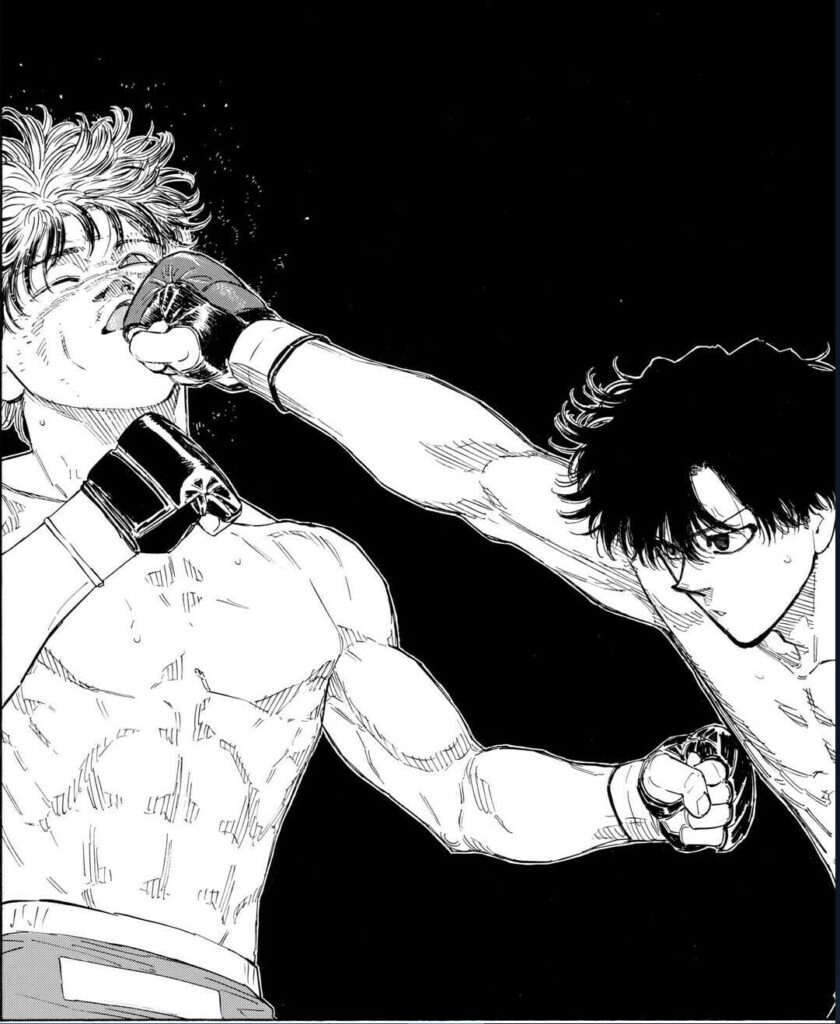
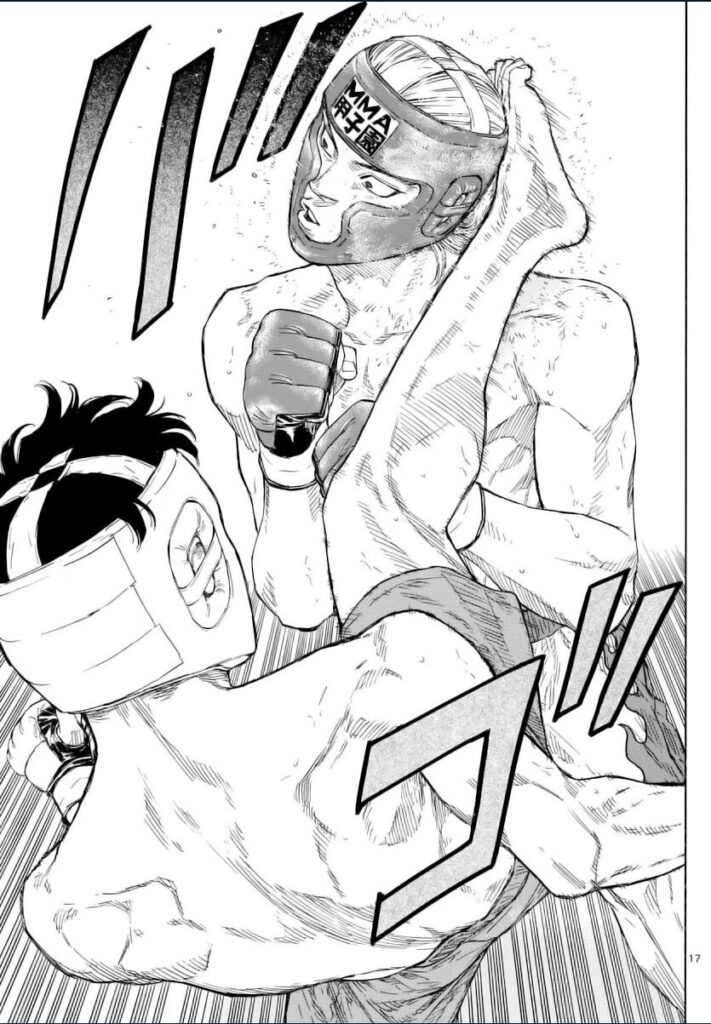
Red Blue’s panels go absolutely crazy. Every punch Tokiwa throws feels like it’s about to burst out of the page, and when Aoba locks in a submission, you can feel the air get squeezed out of the fight. The action shots are clean, brutal, and insanely dynamic, turning every match into an edge of your seat moment that keeps your adrenaline high from start to finish.

The full-page panel shots are some of my favorites in the genre. I really admire how simple and direct they are. In other manga, artists might overload these moments with excessive detail such as gore, extreme body contortions, or exaggerated auras tied to signature moves. Namikiri doesn’t need any of that. He lets the impact speak for itself.

Every character introduced brings their own distinct fighting style, which keeps each arc feeling fresh and exciting. Red Blue has a sizable cast, yet nearly all of its characters are memorable—something a lot of fighting manga struggle with. Even series I really enjoy, like Grappler Baki and Kengan Ashura, feature incredible fights, but much of the cast ends up being forgettable. Many characters feel like they exist solely to be knocked down by an overpowered protagonist.

Red Blue avoids that problem. Its characters feel well-rounded and capable, each equipped with enough skill and personality to leave a lasting impression rather than just serving as obstacles to be cleared.

Kenshin Akazawa Is A Dickhead And His Downfall Will Be Amazing

The catalyst for Aoba Suzuki’s journey into the world of MMA started with his hatred for rising MMA star Kenshin Akazawa. For the longest time I could not perfectly articulate why Aoba dislikes him and why I also share in this sentiment. When I started writing about Red Blue a month ago, I was very stumped by this because on paper Kenshin is actually a good guy. He is the archetypal himbo character of the story that in a traditional setting would have been our protagonist. He shows up for his teammates, he’s humble, hardworking, a little dumb but means well, and skilled. Yet in this story he is the antagonist. What is it about him that just rubs me the wrong way? After receiving the scans for the latest chapters It clicked for me: He’s a self-righteous prick!

At first, it’s easy to miss this critical flaw in Kenshin’s character because he comes across as a textbook “nice guy.” Because of that, Aoba’s motivation getting into MMA to beat someone who’s generally likable can seem a little weak on the surface. But think about it this way: have you ever met someone who tries to impose their way of life on you? Or that one person who constantly gives unsolicited advice, convinced they know what’s best for you? Only to make you feel even more insecure? That is what sends Aoba over the edge. Kenshin revealed a deep wound in him and challenged his identity. When Kenshin calls Aoba “hollow,” it isn’t said out of pure malice, but that almost makes it worse. Kenshin is someone who’s confident, naturally talented, and driven by clear ambition. From Kenshin’s perspective, he’s just stating an observation. From Aoba’s perspective, it’s a brutal confirmation of something he already fears about himself.

At the start of Red Blue, Aoba doesn’t really want anything. He drifts through life, lets people push him around, and hasn’t found a reason to fight. Kenshin pointing that out forces Aoba to confront his own emptiness head-on. Instead of rejecting the comment outright, it festers. That’s why Aoba becomes obsessed with the idea of hitting Kenshin even once. It’s not about winning a fight; it’s about proving that he isn’t nothing.

You’re probably thinking “Okay so what? Aoba needed a hobby. Kenshin gave him the drive.” And if it was just left as that, I would also feel like his hatred is misplaced. That was until the Koshien Tournament Arc.

Dickhead Case #1: Koshien Tournament Arc

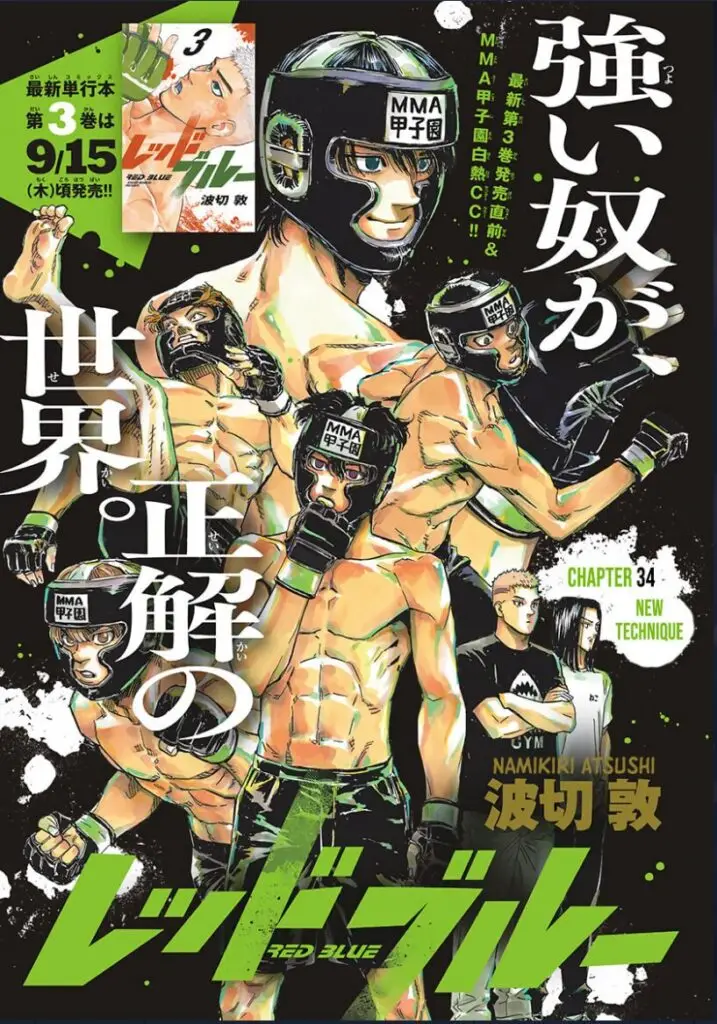
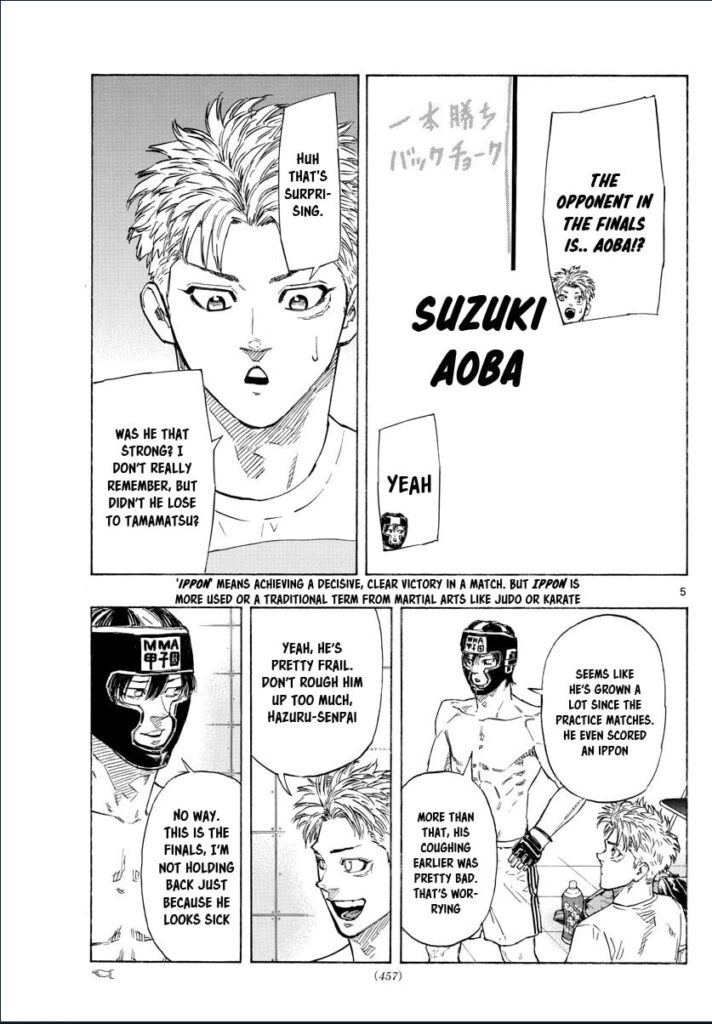
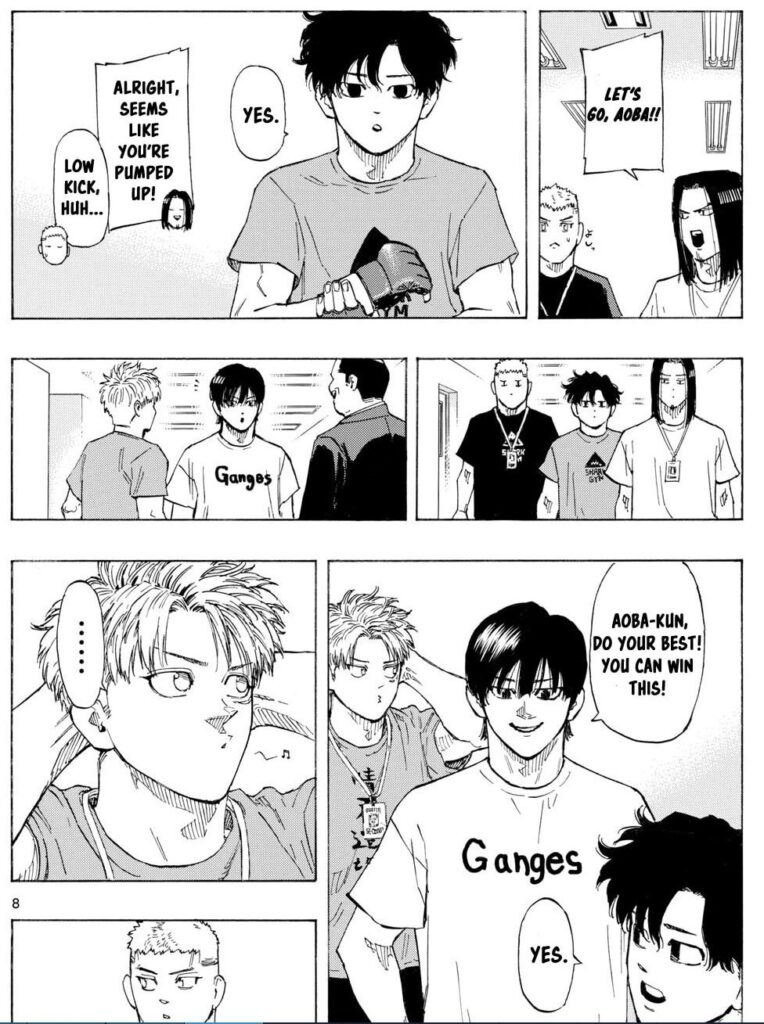
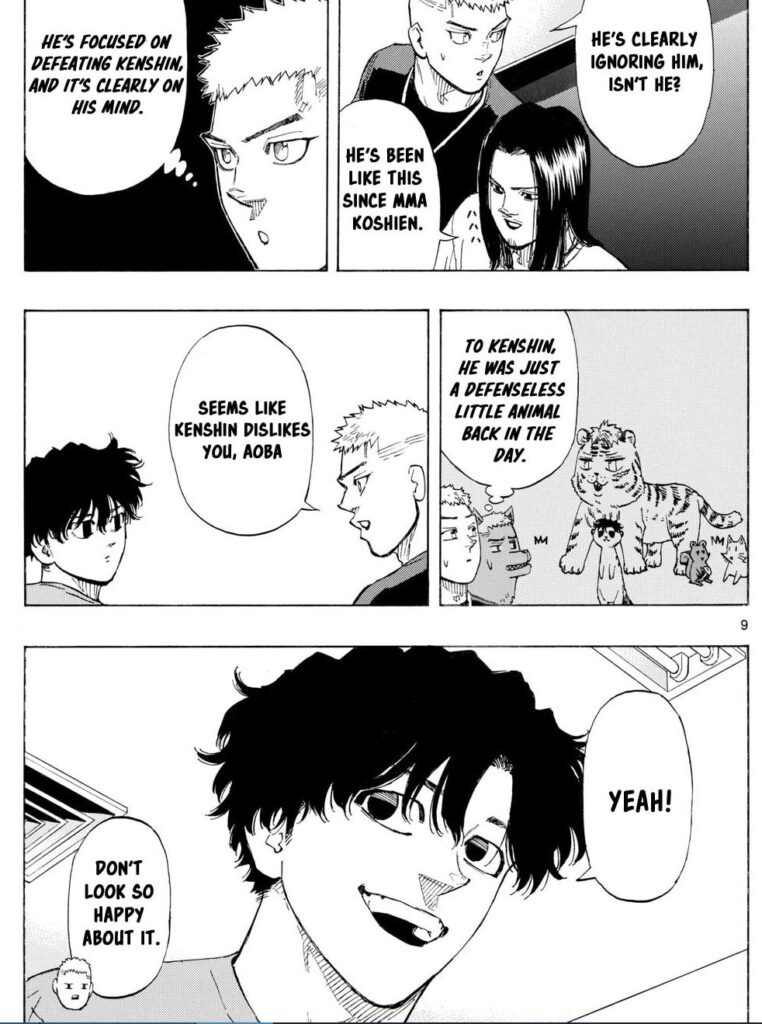
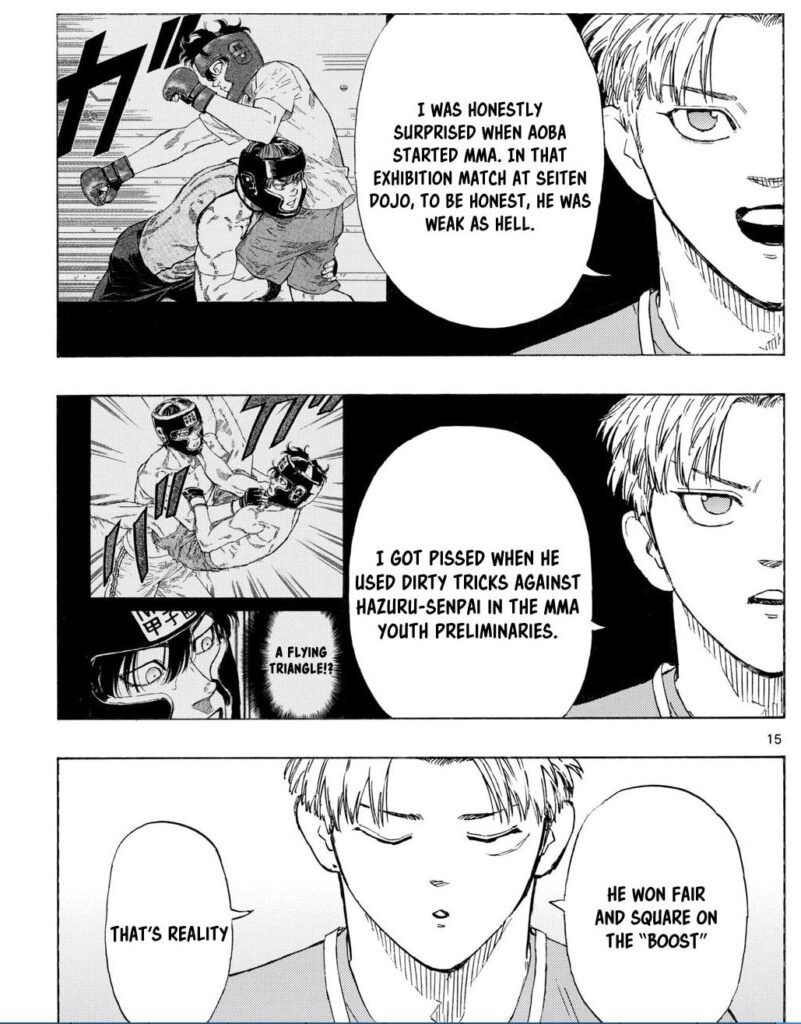
Aoba Suzuki had just completed his preliminaries for the Koshien Tournament. Nobody thought he would get this far but has overcame every obstacle in front of him. He had a tough match with one of Kenshin’s friend and teammate Hazuru Yuuga, an amazing fighter in his own right. But after an illegal blow during their match, victory was his. There is one scene in the arc that really stuck out to me about Kenshin’s character. After dabbing up his friend before the start of his match Kenshin completely ignores Aoba, walking past him as if he was invisible. This surprised me because it was unexpected for him to be so dismissive especially when he was just so friendly moments before. That kind of behavior hits harder than trash talk because it sends the message: you don’t even register to me. For someone like Aoba, who’s already struggling with feeling invisible and “hollow,” that moment reinforces the idea that Kenshin sees Aoba as someone who is lower in hierarchy. 

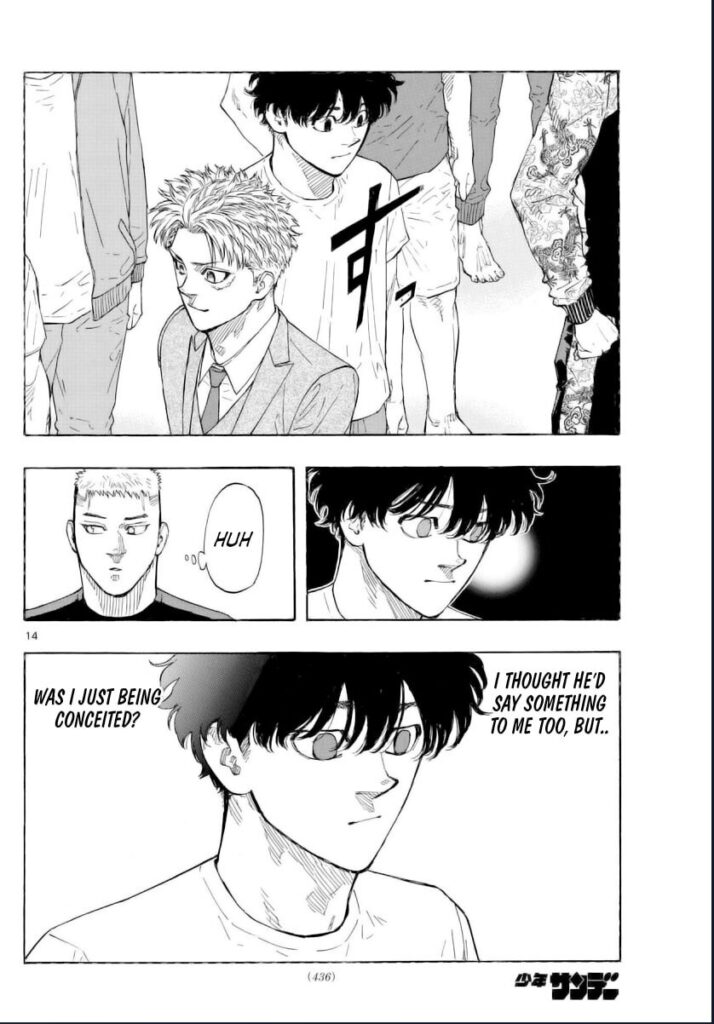
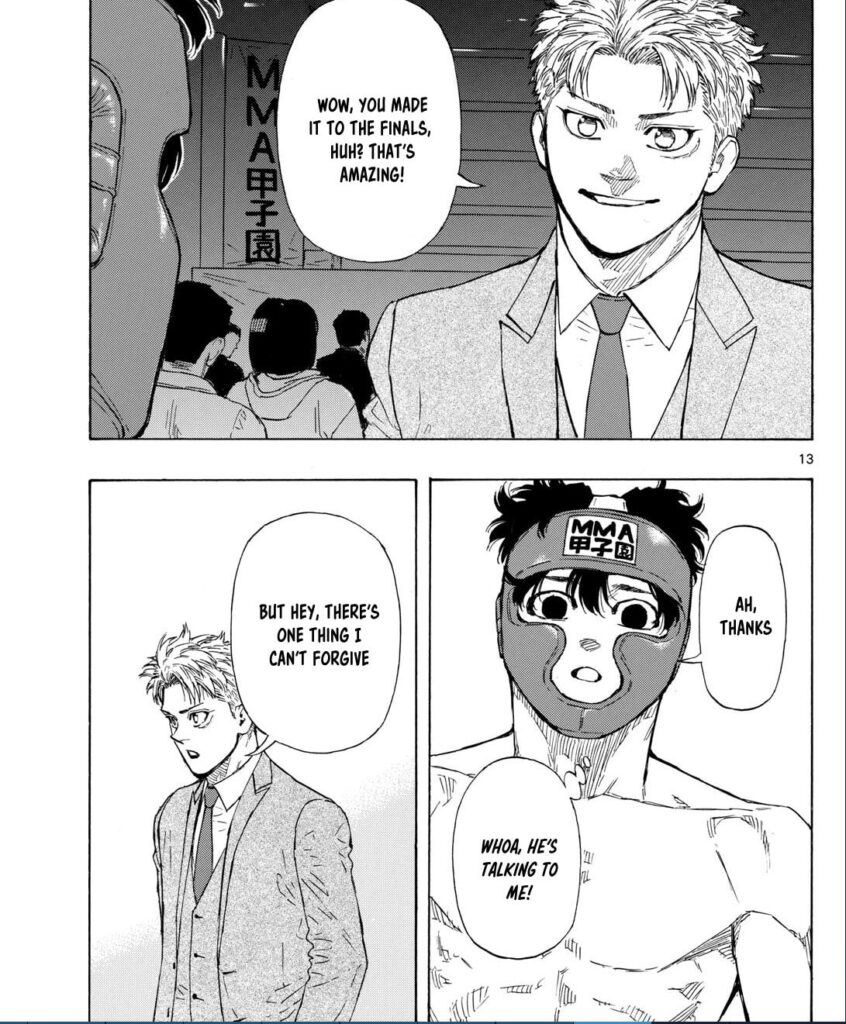
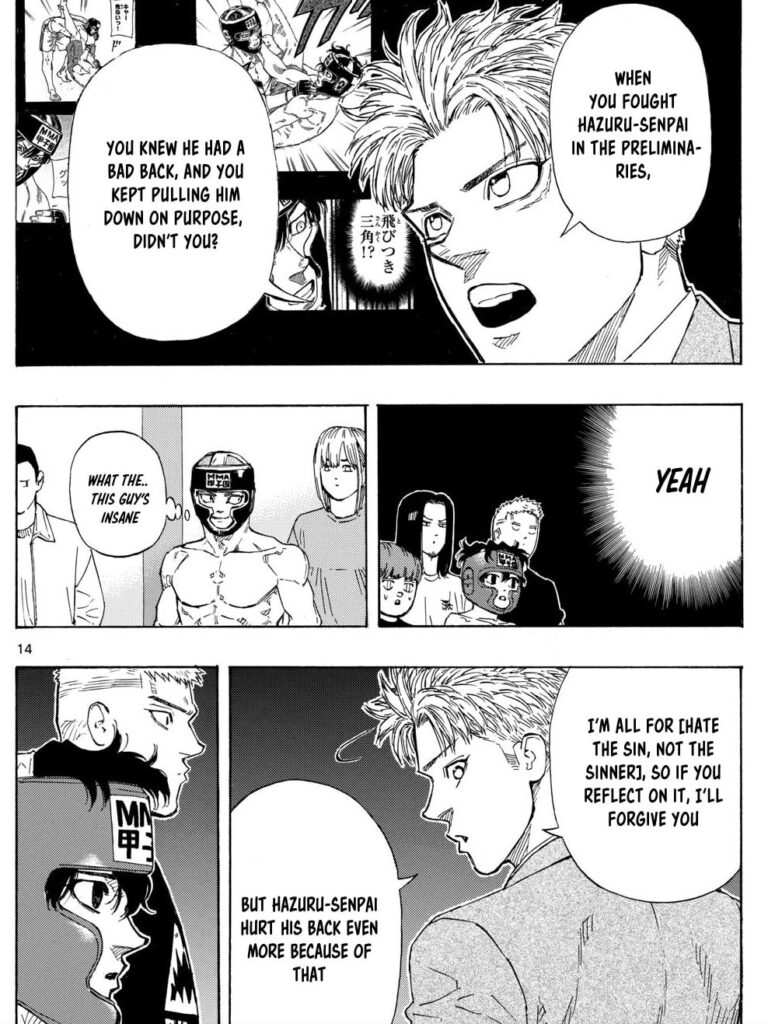
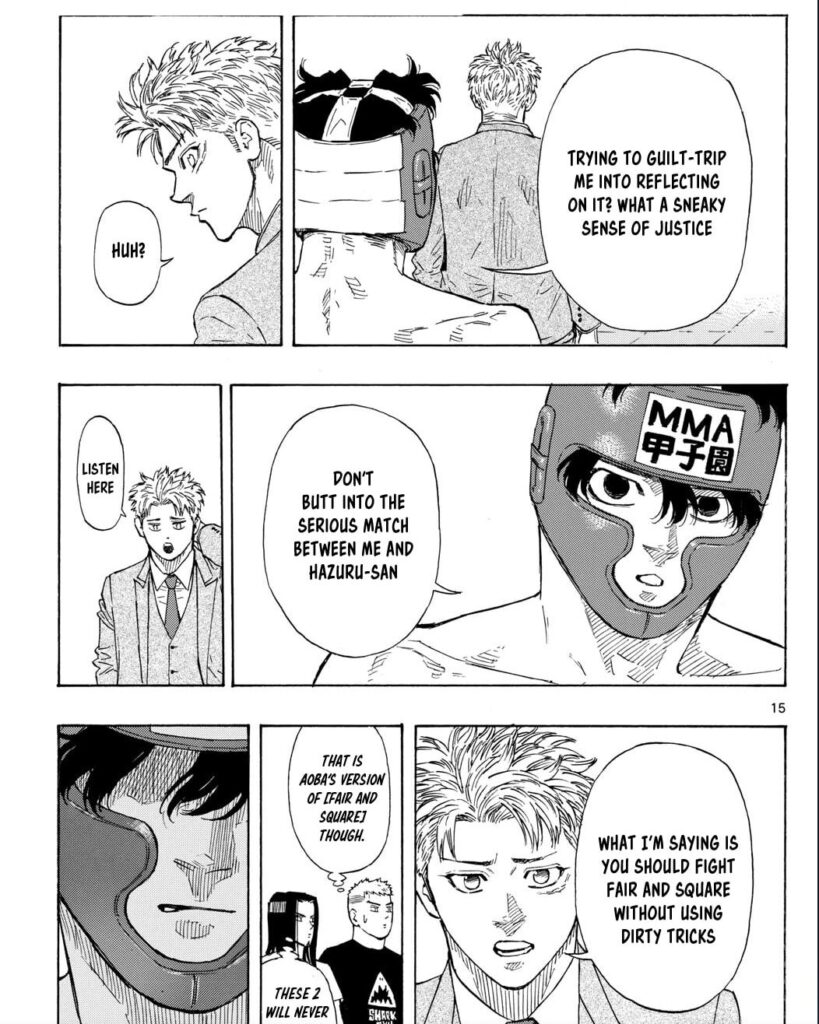
Then before Aoba’s final match with striker Hachiya Mamoru, he comes up to him saying that although its cool that he made it this far, the road to get there was because Hazuru was not in top form and Aoba exploited that. WHAT!?!? 

In Kenshin’s world, there is only one way to a true victory and if you do not fit his worldview, he brands you as a bad guy as if he some kind of arbitrator of justice.

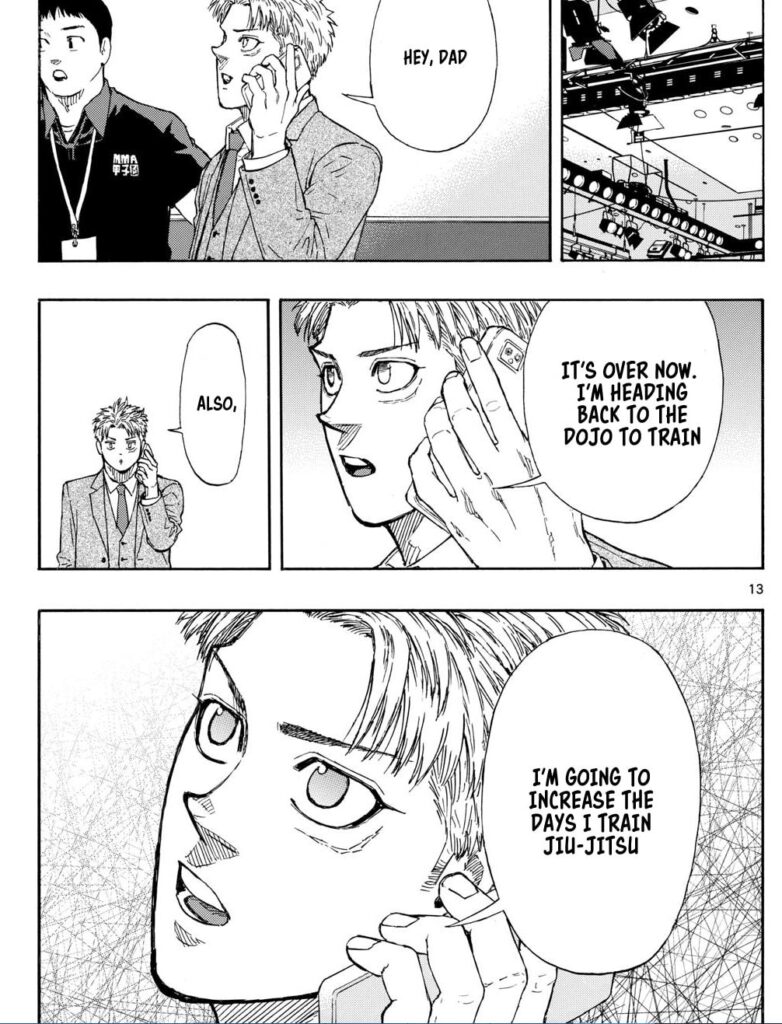
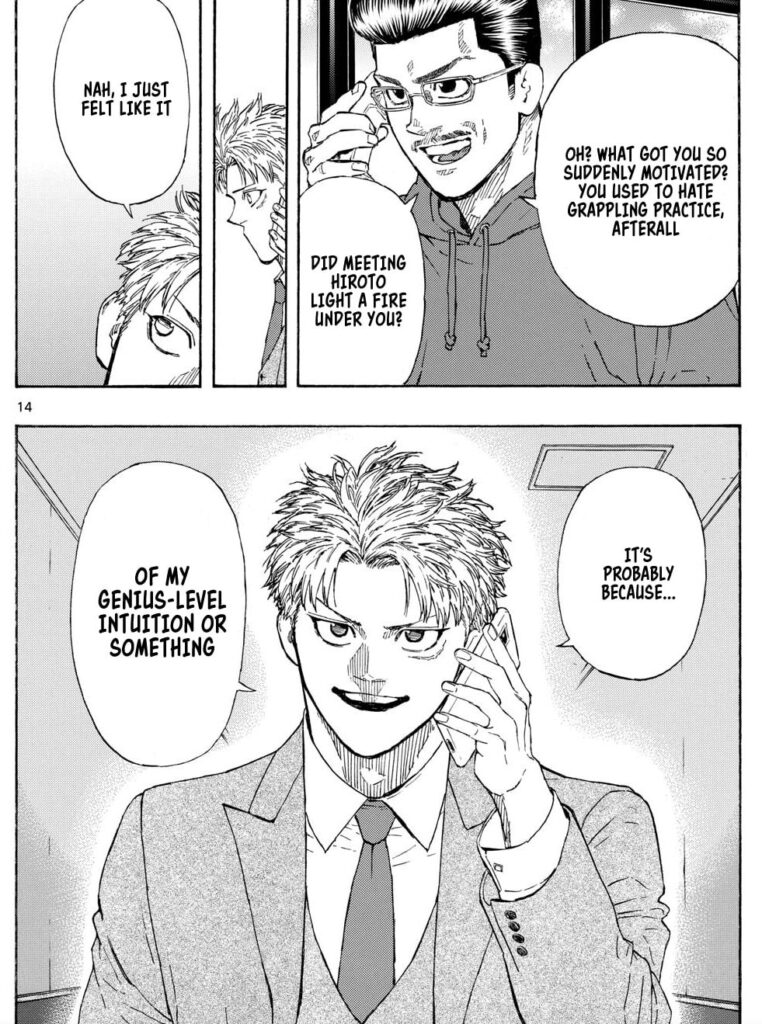
AND THEN after Aoba wins his fight with Hachiya and becomes the Koshien Bantaweight Champion, he decides that he needs to up his ground work and not because Aoba Suzuki is a potential threat that could defeat him, but because of his “genius intuition”. This is one of his major flaws as a person; he truly believes that he is unstoppable. He thought as long as he perfects his striking that he will never have to take it to the ground ever. But Aoba is showing that there are other ways to win and his style so happens to reveal a potential weakness in him that he refuses to admit. 

Dickhead Case #2: Boost 50th Arc

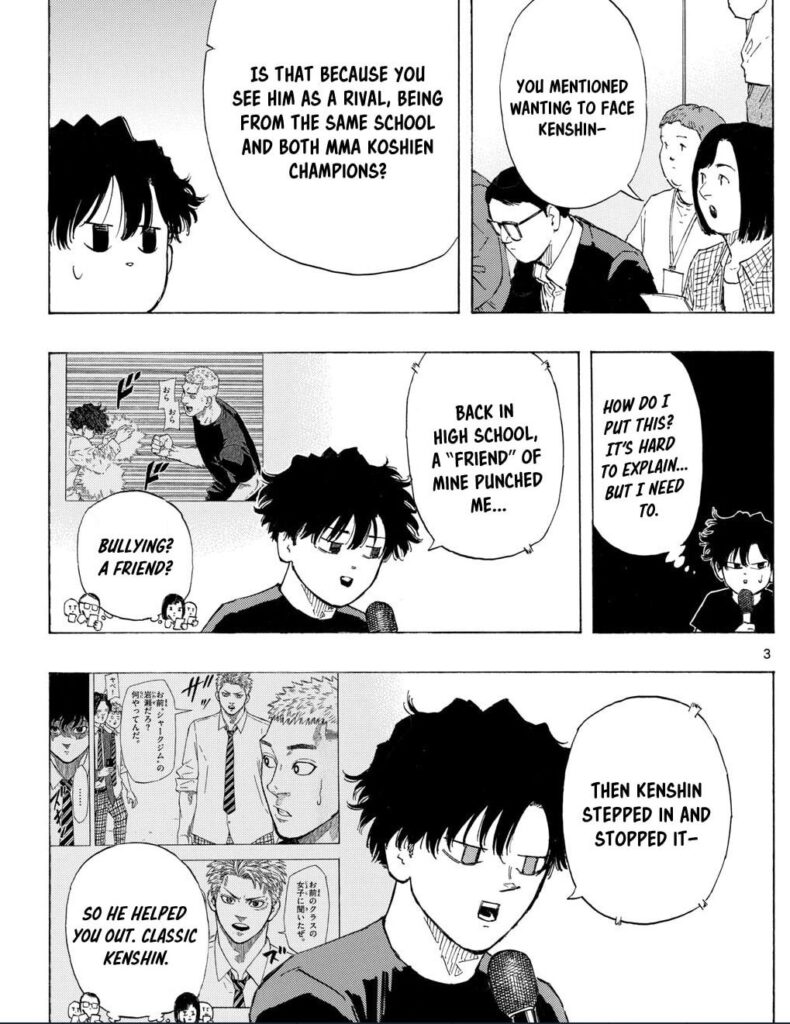
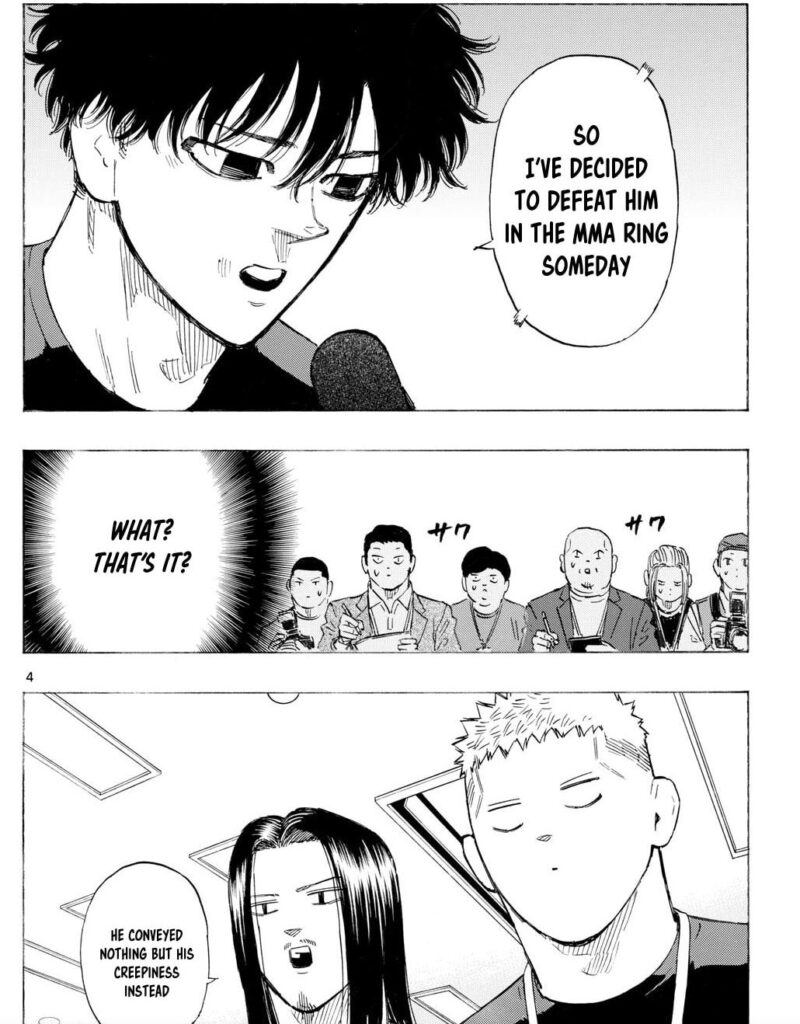
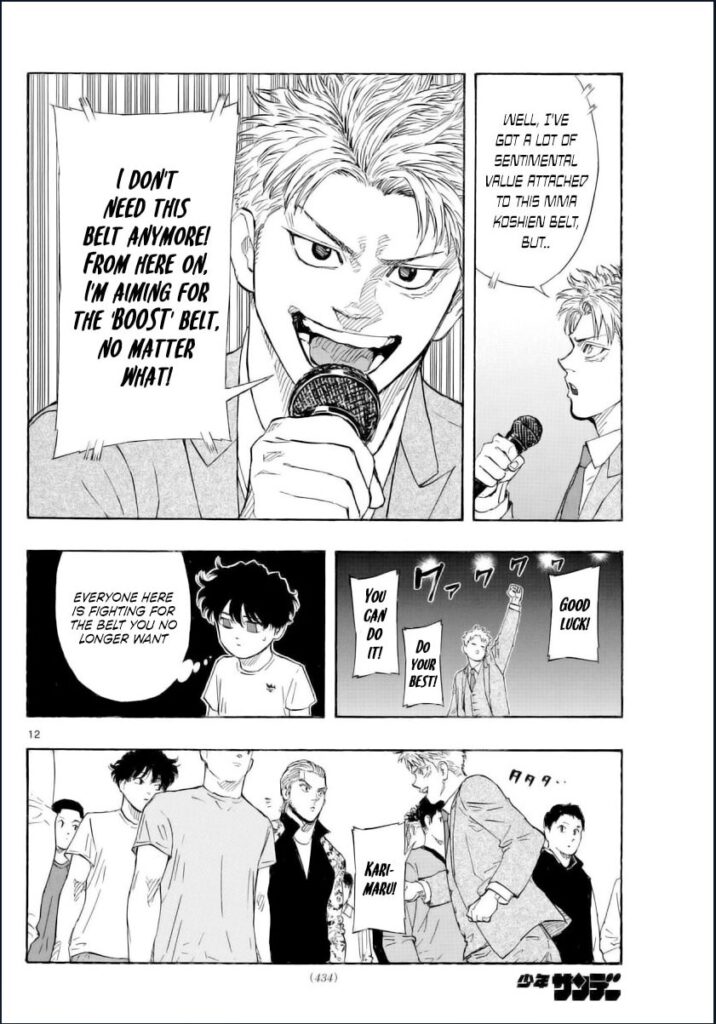
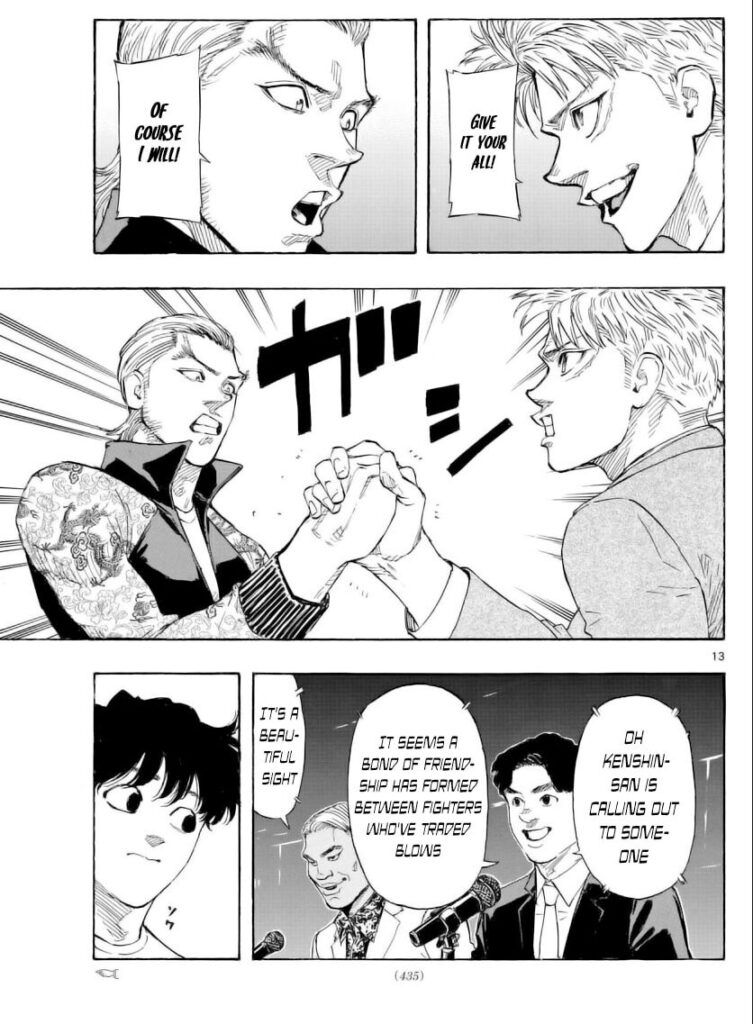
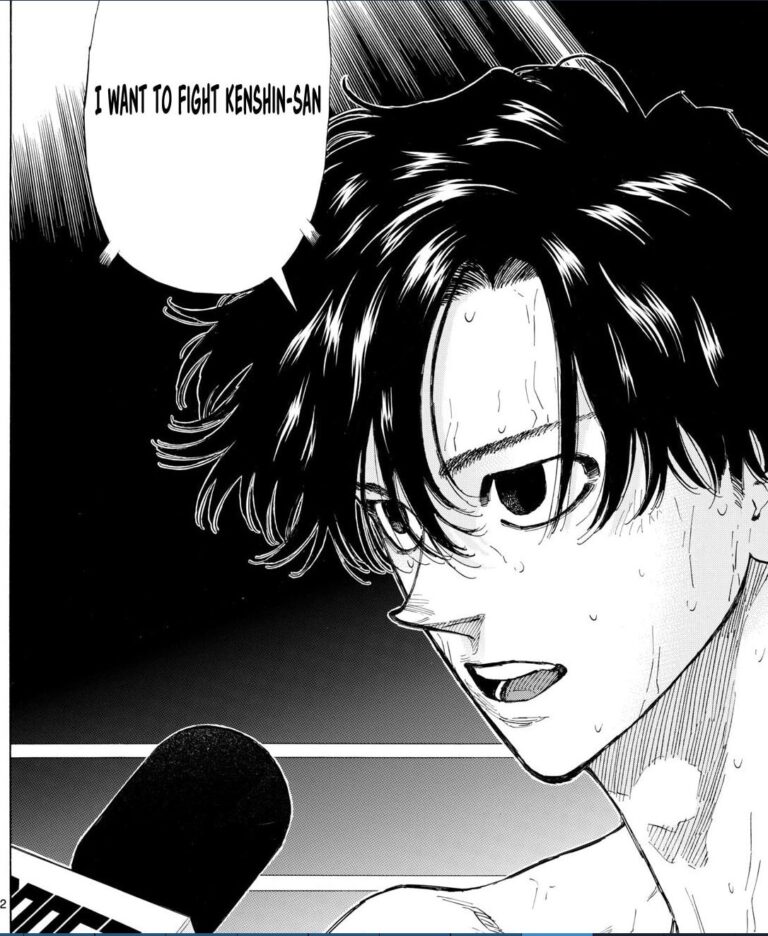
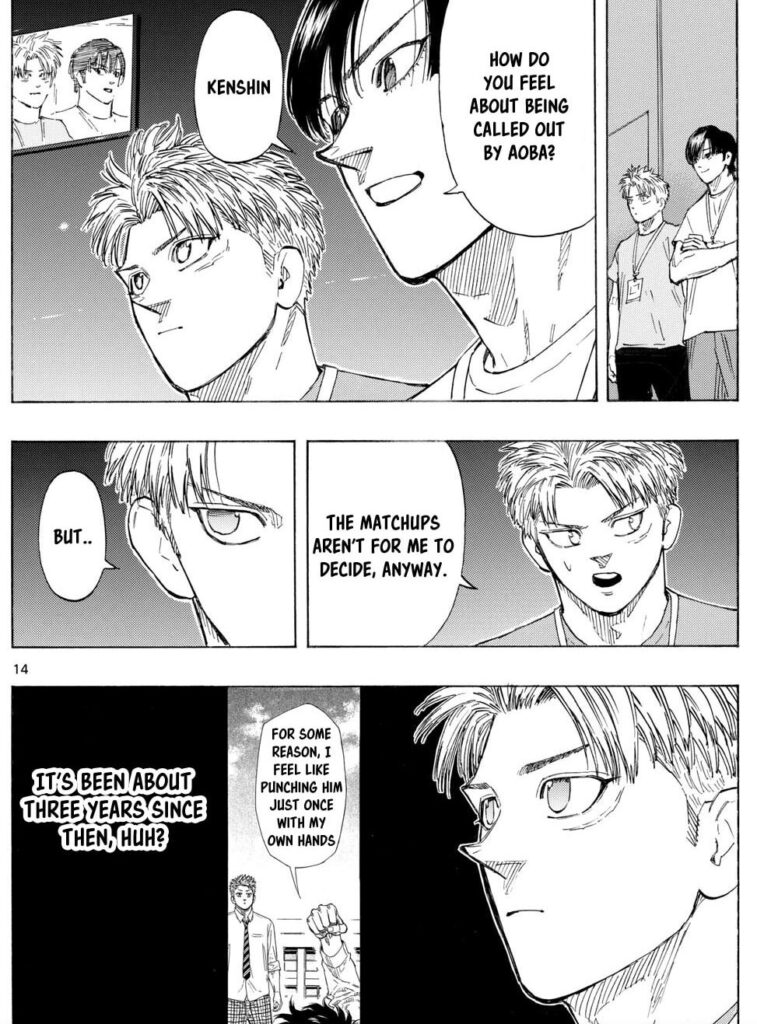
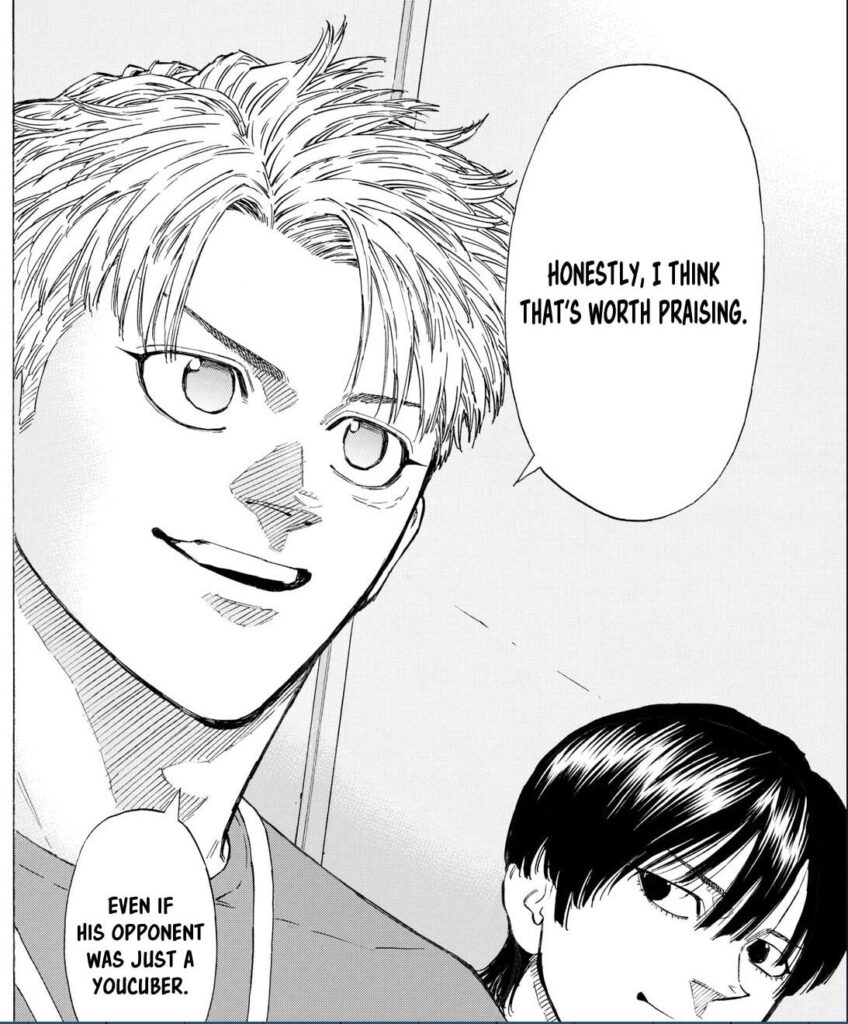
During the Boost 50 arc, Aoba defeats YouCuber Mu-suke. A powerful fighter in his own right due to his natural athletic ability. After his victory Aoba declares war on Kenshin for the 2nd time but for all to hear. At this point, my guys skills are sharp. He is a proper fighter now and Aoba is READY! Time and time again he has surpassed everyone’s expectations of him. No more is he the weak and “hollow” guy that Kenshin saved 3 years ago. And YET Kenshin continues to undermine him. 

What makes it worse is how Kenshin reacts to Aoba’s wins. Instead of recognizing Aoba’s growth or potential, he constantly explains them away to luck, a bad matchup, the opponent’s mistake, anything but Aoba himself. Kenshin has already decided who Aoba is, and accepting Aoba’s improvement would mean admitting he was wrong. He unconsciously guards his worldview by downplaying Aoba’s progress. If Aoba can grow from “hollow” into a real threat, then Kenshin’s neat hierarchy where talent and purpose are fixed traits starts to fall apart.

He believes he understands people completely at a glance, and once he categorizes someone as “less than,” he struggles to ever revise that judgment. That’s why Aoba’s rise isn’t just a sports story; it’s a direct challenge to Kenshin’s belief system.

Aoba Has To Kick His Ass Out Of Principal

Hear me out, Aoba must defeat him to make Kenshin a better person and perhaps being a better fighter. The fatal flaw with Kenshin is that he has nobody in his current scene who is as strong or is stronger than him. Therefore he has reached a ceiling that he can’t go past until someone more or a threat forces him to evolve further as a fighter. And unfortunately when you do not have anyone that can go up against you pound for pound, you start to feel invincible and arrogant. We are in Kenshin Akazawa’s world and we’re just living in it. That’s why its important that Aoba kicks his ass and knocks him down a peg.
Kenshin doesn’t really need another win. What he needs is to lose. He needs someone who can’t be brushed off, someone who forces him to admit that he might not have everything figured out. That’s where Aoba comes in. Aoba is the one fighter Kenshin keeps refusing to take seriously, and that’s exactly why he’s the perfect person to knock him off his pedestal.

For Aoba, beating Kenshin isn’t just about climbing the rankings—it’s about shutting down the idea that people are stuck where they start. For Kenshin, losing would mean finally having to look at someone he dismissed and admit they grew past him. That kind of loss is uncomfortable, but it’s also the kind that actually makes you better.
That’s why their inevitable clash matters so much. It’s not about good vs. evil or hero vs. villain. It’s about one guy who thought he’d already arrived, and another who refused to stay invisible. And honestly? Red Blue will be at its best the moment Kenshin realizes the world doesn’t revolve around him anymore.
Leave a Reply

Your email address will not be published. Required fields are marked *


Scroll back to top